


Index
Charleena Schweda

Charleena Schweda holds a B.A. and M.A. in English and American Studies and General and Comparative Literature. Having studied at the Ruhr-Universität Bochum (RUB) and the University of Limerick, Ireland (UL), she joined the research training group as a doctoral researcher in English Studies in 2022. Aside from her position at the RTG, she works as a research assistant at the Chair of American Studies: Culture and Literature and as a lecturer at the Chair of English Studies: Culture and Literature.
In her research, she studies anglophone culture, literature, and film, particularly around the turn of the millennium and in the Victorian era. She specialises in Gender Studies, Queer Studies and popular culture, with a focus on representations of womanhood, girlhood, and queerness in horror and monster texts. During her studies she worked as both a journalist and an editor and functioned as a student representative for the Department of General and Comparative Literature. She interned at the Goethe-Institut Irland and the Nuremberg International Human Rights Film Festival, among others.
Project: “Hell Is a Teenage Girl”: The Sentimental in Female Coming-of-Age Monster Films
Monsters have always roamed the worlds of fiction, mythology, and religion. Ambiguous and multi-coded, they function as playgrounds for discussions on socio-cultural issues. When monsters appear as adolescent girls, these negotiations centralise their gender, focusing on themes such as girlhood, the female body, sexuality, gender roles, and, above all, the experience of coming-of-age as a girl. Monstrosity becomes an allegory for puberty; the ‘horrors’ of coming-of-are are aligned with the horrors of monstrosity.
In this context, my project explores how the sentimental emerges and functions in what I loosely regard to be the subgenre of female coming-of-age monster films: Horror films which explore intimacy, girlhood, and emotionality through the metaphorically charged concept of female monstrosity. Within this specific framework, the sentimental operates as an aesthetic and narrative mode that I call “sentimental monstrosity”. To identify its diverse functions, I explore a range of anglophone horror films from the early 21st century, combining close readings of these individual films with a comparative approach that regards literary, filmic, and cultural traditions from the early 19th century until today.
Edited Volumes
- Allirand, Lise et al. Literatur und das Böse: Beiträge zum Studierendenkongress Komparatistik 2019. Ch. A. Bachmann: 2021.
Book Contributions
- Forthcoming: Schweda, Charleena. “‘Death’s Sadistic Design’: Visions, Predeterminism, and the Disruption of Futurity in Final Destination and Triangle.” Zukunftsträume (WT), ed. Stefanie Kreuzer und Christiane Solte-Gresser. Traum – Wissen – Erzählen. Fink/Brill: 2025/2026.
- Schweda, Charleena. “‘The Children of Her Rage’: Mutterschaft und Doppelgängerinnen im Horrorfilm.” Der Wille zur Wiederholung II: Der Doppelgänger in Literatur und Film, ed. Jörg Türschmann et al. Serienräume – global, lokal, glokal. Springer: 2025, pp. 287-296.
- Schweda, Charleena. “‘The only thing that matters to her’: Artificial Intelligence and the Sentimentalization of Motherhood in M3GAN (2022)”. Sentimental State(s), ed. Heike Paul and Sarah Miriam Pritz. Transcript: 2025, pp. 211-33.
- Schweda, Charleena. “Viktorianische Vampirinnen: Instrumente zur Darstellung kontemporärer Tabuthemen.“ Literatur und das Böse: Beiträge zum Studierendenkongress Komparatistik 2019, ed. Lise Allirand et al. Ch. A. Bachmann: 2021, pp. 109-118.
Podcast Episodes
- “Female Monsters – Weibliche Monstrosität feat. Charleena Schweda.” Dr. Horror, hosted by Stefan Sonntagbauer, 28.12.2023.
Teaching
- Monstruous Women: Horror, Gender, and Coming-of-Age in Female Monster Fiction since the 19th Century
- Grundseminar Culture
Talks
- “Zwischen Diversifizierung und Eingrenzung: Schwierigkeiten bei der Umsetzung eines queeren Kanons.” Göttingen, 23.02.2024, Kanonisierungspraktiken im Literaturstudium.
- “‘Death’s Sadistic Design’: Visions, Dreams, and Destiny in 2000s Horror Films.” Saarbrücken, 08.02.2024, Zukunftsträume | Rêves de l’Avenir | Dreams of the Future.
- “‘The Children of her Rage’: Doppelgängerinnen als Spaltung des Selbst im Horrorfilm. ” Wien, 15.12.2023, Je est un autre: Der Doppelgänger in Film und Literatur.
- “‘More than a toy, […] a part of the family’: Artificial Intelligence as a Threat to Interpersonal Intimacy and Family Values in M3GAN (2023).” Erlangen/Nürnberg, 22.10.2023, Sentimental State(s).
- “‘[A] man with no interior, a man with no thoughts’: (Un-)Certainties and the All-Encompassing Masculinity of The New York Trilogy.“ Bochum, 10.01.2020, Urban Masculinities (Student Conference).
- “Viktorianische Vampirinnen: Instrumente zur Darstellung kontemporärer Tabuthemen.“ Bochum, 14.06.2019, Literatur & das Böse (10. Studierendenkongress der Komparatistik).
- “A Tale of Marriage and ‘Madness’: The Connection between Social Failure and Female ‘Madness’ in Charlotte Brontë’s Jane Eyre and Charles Dickens’ Great Expectations.“ Bochum, 05.04.2019, Foucault & Cultural Studies (Student Conference).
Theresa Siebach
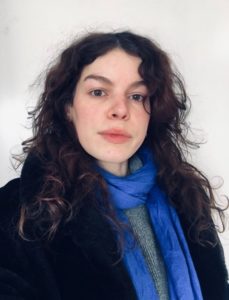
Theresa holds a master’s degree in Cultural Studies from the University of Leipzig and worked as a research assistant during her studies. Afterwards she received funding in form of a research proposal scholarship from the Gutenberg Graduate School of the Humanities and Social Sciences at the University of Mainz. Her research interests include cultural sociology, digital media, popular culture, and memory culture.
Project: “Caring for Yourself in Times of Crisis” – Self-Care as a Media Discourse Phenomenon between Affirmation and Social Criticism (WT)
My PhD project seeks to investigate the ambivalent meanings of “self-care” in media discourse, which tend to oscillate between legitimate individual coping-strategy in times of permanent/multiple crisis and critical assumptions about (neoliberal) self-optimization. In doing so, I am interested in how self-care is characterized and problematized in this critical discourse and how in this context, primarily feminist-intended conceptions of self-care are justified and reclaimed as political counter-practice. I will focus on analyzing the specific imaginations and interpretations of “the self” and society that can be found both in general articulations of self-care as necessity and its critical reception, mostly referring to a perceived state of deficit, exhaustion, and collective suffering. Through the lens of the sociology of knowledge and emotion, the project asks how these findings (and feelings) are significantly justified by means of time-diagnostic observation and how sentimental narratives and ideas are effective here.
Fellowships & Grants
2022: Research Proposal Scholarship of the Gutenberg Graduate School of the Humanities and Social Sciences, University of Mainz
Vincent Steinbach
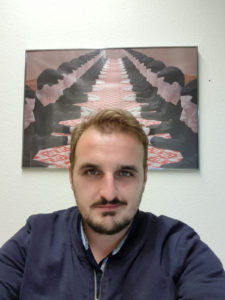
Vincent Steinbach studied sociology and German at FAU Erlangen-Nuremberg. During a stay abroad in Nijmegen, Netherlands, he also studied communication science and sociology at Radboud University. Since April 2019, Vincent Steinbach has been involved in the institutionalization of the Digital Humanities course at FAU Erlangen-Nuremberg. Vincent has also worked in the training of teachers in the field of politics and society. In addition, Vincent Steinbach has been a researcher with the EFI project Discourses and Practices of Digital Sovereignty since April 2019. Vincent Steinbach has been pursuing his research interests in sociological theory, communication and media sociology as well as digitization since October 2022 as part of the DFG Research Training Group The Sentimental in Literature, Culture and Politics.
Project: „Mama, don’t get vaccinated!“ – Forms and functions of the sentimental in the staging of valid knowledge using the example of the vaccination campaign in Germany
The project focuses on the question of how content in online videos is staged as valid knowledge. That depends on the media used for staging and dissemination. Of particular interest is the role played by affects and especially sentiment when it comes to staging something as valid knowledge in online videos. To do this, the concept of the sentimental must first be translated from the cultural-scientific discourse into the social-theoretical discourse before the forms and functions of the sentimental in the staging can be examined. Different staging strategies are empirically examined using the example of two media-prominent and emotionally charged bodies of knowledge: the debate about the CoVid 19 pandemic and the CoVid 19 vaccine. Specifically, it is about content in online videos. Video analyzes and situation analyzes sensu Adele Clarke are carried out to describe and relate the forms and functions of the sentimental in online videos. To reconstruct the staging strategies, the producers of online videos are interviewed as part of expert interviews.
- 11/2023 „Wissen, YouTube und das Sentimentale.“ Vortrag im Rahmen des Workshops „Digitalisierung und gesellschaftliche Selbstverständigung“ an der Universität Bern, Schweiz.
- 10/2023 „United by anger.“ Vortrag im Rahmen der Konferenz „Media and Emotional Mobilization“ an der LNU Kalmar, Schweden.
- 09/2023 „United by anger.“ Vortrag im Rahmen der Konferenz „Sentimental State(s): Sentimental Politics of Order and Belonging“ an der FAU Erlangen-Nürnberg.
- 05/2021 mit Ronald Staples und Siglinde Peetz: „Goodbye World. On the incommensurability of technical and sensemaking communication.“ Vortrag im Rahmen der STS Conference in Graz im Mai 2021.
- 02/2021 „Ethnografie digitaler Anwendung: Vertrauensbildungsprozesse in sozialen Medien qualitativ erforschen“. Vortrag im Rahmen des DH Kolloquiums an der FAU Erlangen-Nürnberg.
- 09/2020 mit Ronald Staples und Siglinde Peetz: „Daten in Verfahren. Zur Übersetzungskapazität des Social Interface in Gerichtsverfahren“. Vortrag im Rahmen der Sektionssitzung der Rechtssoziologie zum Kongress der Deutschen Gesellschaft für Soziologie im September 2020.
- Peetz, Siglinde, Ronald Staples und Vincent Steinbach. 2021. Zur Übersetzungskapazität des Social Interface in Gerichtsverfahren. In Gesellschaft unter Spannung. Verhandlungen des 40. Kongresses der Deutschen Gesellschaft für Soziologie 2020, Hrsg. Birgit Blättel-Mink.
- Peetz, Siglinde, Ronald Staples und Vincent Steinbach. 2021. Goodbye World. On the incommensurability of technical and sensemaking communication. In Proceedings of the STS Conference Graz 2021. DOI: 10.3217/978-3-85125-855-4-17.
- Sauer, Stefan, Ronald Staples, und Vincent Steinbach. 2022. Jenseits von digitaler Souveränität? Zum Umgang mit dem Autonomie/Kontrolle Dilemma in sich transformierenden Arbeitswelten. In Was heißt digitale Souveränität?, Hrsg. Georg Glasze, Eva Odzuck und Ronald Staples. Bielefeld: transcript.
Teaching
- Proseminar Einführung in das Studium der digitalen Geistes- und Sozialwissenschaften
- Proseminar Lehrforschungsprojekt Grounded Theory und Situationsanalyse
- Proseminar Lehrforschungsprojekt Ethnografie digitaler Anwendungen
- Proseminar Digitalisierung und Umweltschutz
- Proseminar Theorie und Praxis von Lernvideos
- Proseminar Smarte, neue Welt
- Hauptseminar Soziologische Theorie
- Hauptseminar Sozialstrukturanalyse I+II
- Hauptseminar Medientheorien
Hana Vrdoljak

Hana holds a bachelor’s degree in English and American Studies as well as French Philology. She completed the bilingual master’s program The Americas/Las Américas at FAU Erlangen-Nuremberg, spending a semester abroad at Universitat de València, Spain. During her studies she worked as a research assistant and tutor. Hana’s primary research interests include hip hop studies, feminist theory, as well as representations of race and gender in (popular) culture and literature of the Americas.
Project:
Although sentimental tropes are commonly used in American music, hip hop culture is still frequently viewed as a non- (or even anti-) sentimental art form. In an attempt to counter this notion, my PhD project sets out to examine the sentimental dimension in hip hop culture. I propose not only that hip hop does, in fact, have sentimental traits, but also that there has been a sentimental turn in its culture in recent years. Most prominently, this phenomenon can be seen in the emergence and growing popularity of the emo-rap subgenre. Moreover, it can also be observed with respect to the ubiquitous nostalgia of contemporary hip hop culture, which is particularly reflected in the romanticization of the movement’s beginnings and the iconization of deceased rappers. Like much activist art, hip hop aims to mobilize compassion among its audience to achieve certain political goals, seeking to humanize marginalized groups by means of popular sentimental tropes. Therefore, the contribution I intend to make with this dissertation is to identify and systematically explore sentimental elements in works by American rappers in order to analyze their forms and function.
Andrew Wildermuth

Andrew is from Annapolis, Maryland, where he studied at Anne Arundel Community College and St. Mary’s College of Maryland and graduated in 2017. He received an MA in North American studies from FAU in 2021. Since 2022, he has been a research associate in “The Sentimental,” where he submitted his dissertation—“American Malleability: Aesthetics and Politics of Change in U.S. Literature and Print, 1820–1870”—in June 2025. His doctoral work in “The Sentimental” has been supported by research stays as a Packer Fellow at the American Antiquarian Society, a Thoreau Society Fellow, and a BAA Postgraduate Fellow at Harvard. His research has been published in Amerikastudien, Iperstoria, and ZAA. He is co-editor of the literary journal The TRIAL and his poems have been published in The Yale Review, Oxford Poetry, and Lana Turner. His new postdoctoral project, “American Primordial,” examines American origin stories from the seventeenth to the twenty-first century. You can find his Website here.
Project: American Malleability: Aesthetics and Politics of Change in U.S. Literature and Print, 1820–1870
Submitted in June 2025, my PhD examines the relation between print and ideology in the United States in the wake of profound transformations to both print technology and political economy in the final years of the 1820s. New people got access to new machines—and new ideas were born, which still stubbornly impact the world we live in. I thus examine the respective engagements of “malleability”—or, the aesthetics and politics of change—in texts by authors including Margaret Fuller, Frederick Douglass, William Apess, and John Rollin Ridge, as well as in newspapers across the middle part of the century. From the Cherokee Nation to California to the countryside of Massachusetts, print texts contest debates over navigating novel political arrangements. In reading these curious texts comparatively, I argue, we might find important origins of the affective arrangements of modern political life.
Papers and Talks
• “American Primordial: Borders of Civilization between The Cherokee Phoenix and Anglo-American Coverage of the 1762 Cherokee Delegation to London,” Symposium of the British Association of Nineteenth-Century Americanists, University of Paris-Cité, France, December 2025 (forthcoming)
• “‘The Great Panacea for All the Disorders in the Universe, Is Love’: The Penitentiary and Women’s Health in Fuller’s Tribune and Child’s Letters from New-York,” Critical Health: Feminist Perspectives on Health and Well-Being in the Nineteenth-Century United States, Sorbonne University, Paris, France, October 2025
• “1956: Some Trees, Howl, and the Rupture of Pleasure Politics in Poetry of Late Capital,” BAA Summer Academy on “North American Narratives of Crisis and Repair,” Montréal, Québec, July 2025
• “1827: Freedom’s Journal, The Cherokee Phoenix, and the Birth of Radical-Critical Print,” Annual Meeting of the German Association of American Studies, University of Siegen, Germany, June 2025
• “Malleability in American Periodical Cultures, 1820–1850,” American Antiquarian Society, Worcester, MA, September 2024
• “Tale Twice Told: Law, Indigenous Sovereignty, and Reforming Boston in Apess’s Indian Nullification (1835) and Hawthorne’s Blithedale Romance (1852),” Nineteenth-Century Global Cities and Urban Worlds: Symposium of the Society for Global Nineteenth-Century Studies, Aix-Marseille University, France, June 2024
• “‘My Heart, a Wall / of Living, Loving Clay’: Feeling, Flesh, and Malleability in Frances Harper’s Moses: A Story of the Nile,” Final Conference of Voices/Agencies: America and the Atlantic, 1600–1865, University of Duisburg-Essen, Germany, March 2024
• “‘Pamphlets of a Very Seditious & Inflammatory Character’: Inflammation and Injury in Walker’s Appeal,” Symposium of the British Association for Nineteenth-Century Americanists, University of Bristol, England, December 2023
• “She, He, and We: Pronouns, Protest, and the Politics of Baez–Dylan in D.C.,” Sentimental Ballads in Popular Music, International Symposium, University of Siegen, Germany, September 2023
• “Foraging, Forging, Forgoing: Thoreau as Settler Disaster,” Annual Conference of the Bavarian American Academy, Munich, Germany, July 2023
• “Reading the Body Politic: Phrenology, Ideology, and the Malleable in Melville’s Moby Dick (1851) and Fuller’s Woman in the Nineteenth Century (1845),” Annual Conference of the British Association of American Studies, Keele University, England, April 2023
• “Reading, Liberatory Violence, and Malleability in Narrative of the Life of Frederick Douglass,” Infrastructures of Racism and the Contours of Black Vitality and Resistance: An International Conference, University of Torino, Italy, March 2023
Reviews
• Review of Embodiment in Nineteenth-Century American Literature, by Matthew Rebhorn, 2025, Cambridge University Press, in Studies in the Novel (forthcoming, 2026)
• Review of Born in Blood: Violence and the Making of America, by Scott Gac, 2024, Cambridge University Press. Amerikastudien / American Studies 70, no. 3 (2025): 365–368.
Book Contributions and Special Issues
• “Worlds Different: Occupying Washington, Baez–Dylan, and Our Crises in ‘Sentimental Political Storytelling’,” Special Issue on “Sentimental Pop Ballads” in European Journal of Musicology (under review, 2026)
• “Foraging, Forging, Forgoing—or, Thoreau’s Settler Disaster in the Age of Walker and Apess,” 2026 Annual Publication of the Bavarian American Academy on “Environmental Citizenship,” Universitätsverlag Winter (forthcoming, 2026)
Peer-Reviewed Articles
• “American Malleability: 1820s Print Revolutions and the Aesthetics and Politics of Change in Narrative of the Life of Frederick Douglass.” Amerikastudien / American Studies 70, no. 2 (2025): 135–55.
• “‘Water, Water Everywhere’: Flows, Fate, and Transcendental Settlerism in Margaret Fuller’s Summer on the Lakes, in 1843.” Iperstoria 19 (2022): 49–65.
• “Measured Life: Making Live, the ‘Modern System of Science,’ and the Animated Bodies of Frankenstein.” ZAA: Zeitschrift für Anglistik und Amerikanistik 69, no. 4 (2021): 331–48.
• “‘A Thing Apart’: Sonnet Poetics and Radical Politics in Claude McKay’s Harlem Shadows.” aspeers 14 (2021): 15–31.
Employment
- Since 2022: Doctoral researcher in Graduiertenkolleg “The Sentimental in Literature, Culture, and Politics,” FAU Erlangen-Nürnberg
- 2021–22: Doctoral researcher in Graduiertenkolleg “Modell Romantik,” Friedrich-Schiller University Jena
Grants and Awards
- Bavarian American Academy Summer Academy on “North American Narratives of Crisis and Repair,” Montréal, Québec (July 2025)
- BAA Post-Graduate Research Fellow at Harvard University, Cambridge, MA (Oct 2024–Jan 2025)
- Barbara L. Packer Fellow at American Antiquarian Society, Worcester, MA (Aug–Oct 2024)
- Thoreau Country Conservation Alliance Fellow, Concord, MA (July 2024)
- NEH Summer Institute, on “Transcendentalism and Social Reform: Activism and Community Engagement in the Age of Thoreau,” Concord, MA (June–July 2022)
- Final Semester Scholarship, FAU (2021)
Poems (Select)
- “Mean Revision (Paris Poem), Lana Turner 18
- “We’re Teaching Comp Only,” The Yale Review
- “The Republic” and “Focus,” Lana Turner 17
- “Teach Me to Breathe,” Oxford Poetry 98
- “London, Something Like Work,” Oxford Poetry 96
- “Containers,” Ninth Letter
- “Amerikanistik,” Columbia Journal
Teaching
- Rethinking the American Renaissance (PS)
- Integrated Academic Language Skills
- Speaking Skills
- Writing Skills
- Award-Winning Lit: From Eliot to Morrison (PS)
- Introduction to Literary Studies (GS)
Elsa-Margareta Venzmer

Elsa-Margareta Venzmer holds a bachelor’s degree in Media Studies and Musicology and a master’s degree in Media Studies from the Universität Regensburg. In addition, she received a certificate in IT Studies. During her studies she worked as a journalist for the German online newspaper ShortNews, as a film editor for the website Save.TV, and as a freelance author. In 2021 she gained experience as a research fellow at the Institute for Media Studies at Philipps-Universität Marburg. Her research interests include film studies, quality television, fan studies, feminist theory and affect studies.
Project: Ineffable Husbands – Die Inszenierung und Rezeption sentimentaler Männerfreundschaften in Buddy-Filmen und -Serien. Versuch einer Systematisierung des Verhältnisses von Queerbaiting, Affizierung und Fandom
The dissertation project examines the staging and reception of sentimental male friendships in buddy films and TV series. The aim of the project is to determine how these media texts affect viewers through their aesthetic design and narrative themes, and further, how these stimulate emotional appropriation processes and participatory culture, especially the writing of fan fiction. The main interest lies in such fan fictions in which female fans transform two male characters, who in the original texts are linked by a heterosexual friendship (“buddies”), into a homosexual couple and create a love story. The project seeks to analyze what prompts authors of fan fiction to take this narrative step and focuses in particular on the phenomenon of ‘queerbaiting’. The project intends to show that sentimentality plays a crucial role in queerbaiting and affecting the spectator by analyzing films and TV series that rely on the sentimental mode. Next to the forms of the sentimental in cultural texts, the project is also interested in its functions: a second aim is thus to investigate whether and why media producers use certain aesthetics and narrative structures in a targeted manner – for example, so that the discussion of their media texts through the creative appropriation processes of the fans continues many years after their release.
Talks
- 07/2024: “Feelings in Frames: Evolving Gender Portrayals in Animated Family Sitcoms”, joint workshop The Poetics and Politics of Family Feelings of the research training groups 2845 “Family Matters – Figuren der Entbindung” (LMU München) and 2726 “The Sentimental in Literature, Culture, and Politics” (FAU Erlangen-Nürnberg), Carl Friedrich von Siemens Stiftung München.
- 11/2023: “Ineffable Husbands – The Staging and Reception of Sentimentality in Buddy Films and TV Series. Systematizing the Interplay of Queerbaiting, Affect, and Fandom”, Method Lab of the Fan and Participation Studies workgroup of the German Society for Media Studies (GfM), Zoom.
- 09/2023: “Sentimentale Abhängigkeiten zwischen FernsehproduzentIn und Fan: Zum Verhältnis von Queerbaiting, Affekt und Fandom”, annual conference Abhängigkeiten of the German Society for Media Studies (GfM), Rheinische Friedrich-Wilhelms-Universität Bonn.
- 06/2023: “Einführung in die feministische Filmanalyse”, lecture Vermittlung der Grundlagen der Filmanalyse in einem diskursiv-disziplinübergreifenden Kontext, Hochschule Fulda – University of Applied Sciences.
- 05/2023: “Einführung ins Quality Television”, seminar The Sentimental Disposition of (Popular) Posthumanism (Christian Krug, English Cultural and Literary Studies), Friedrich-Alexander-Universität Erlangen-Nürnberg.
- 04/2023: “Ineffable Husbands – Die Inszenierung und Rezeption sentimentaler Männerfreundschaften in Buddy-Filmen und -Serien. Versuch einer Systematisierung des Verhältnisses von Queerbaiting, Affizierung und Fandom”, Film- und Medienwissenschaftliches Kolloquium (ffk36), Paris-Lodron-Universität Salzburg & Universität Mozarteum Salzburg.
- 01/2023: “‘We’re partners. What happens to you, happens to me.’ Buddies im Spielfilm” (with Kay Kirchmann), lecture Interdisziplinäre Zugänge zu Freundschaft zwischen Gleichheit und Differenz II, Friedrich-Alexander-Universität Erlangen-Nürnberg.
Publications
- In print: Perspektiven des Quality Television: Theorie – Ästhetik – Fandom – Queer-feministische und gesellschaftskritische Serienpraktiken. Chemnitz: TheNextArt Verlag, 2024.
- In print: “Vorwort: ‘Quality TV ist doch schon vorbei!’ – Zur Perspektive einer modernen Fernsehwissenschaft”. In: Venzmer, Elsa-Margareta (ed.): Perspektiven des Quality Television: Theorie – Ästhetik – Fandom – Queer-feministische und gesellschaftskritische Serienpraktiken. Chemnitz: TheNextArt Verlag, 2024.
- In print: “It’s Ineffable? The Role of Sentimentality and Queerbaiting in Fan-Creator Interactions: Exemplified by the Good Omens Fandom”. In: Venzmer, Elsa-Margareta (ed.): Perspektiven des Quality Television: Theorie – Ästhetik – Fandom – Queer-feministische und gesellschaftskritische Serienpraktiken. Chemnitz: TheNextArt Verlag, 2024.
- In print: “Nicholas Maniu: Queere Männlichkeiten: Bilderwelten männlich-männlichen Begehrens und queerer Geschlechtlichkeit”. In: MEDIENwissenschaft: Rezensionen | Reviews, Nr. 4-24, 2024.
- In print: “Women representing women in the nuclear family: Exemplified by the female characters of the animated sitcom Bob’s Burgers”. In: Animation Practice, Process & Production, vol. 13; Special Issue: Animating Change: Women and Genderqueer Animators, 2024.
- Forthcoming: Fandom | Cultures | Research (with Vera Cuntz-Leng, Sophie G. Einwächter, Anne Ganzert, Vanessa Ossa & Kaya Mogge), 2024.
- 25 Jahre Manga-Boom. Einblicke in die Welt der deutschsprachigen Manga-Kunst. Erlangen: Comicmuseum Erlangen, 2024.
- “Ineffable Husbands. Sentimental Queerbaiting in the TV Series Good Omens”. In: ffk Journal, Nr. 9, 2024, pp. 49–66.
- “Finding Those ‘Hints’: Sentimental Queerbaiting on TV Exemplified by the Amazon Prime Series Good Omens”. In: Piepiorka, Christine & Zündel, Jana (eds.): Blog Fernsehmomente of the working group Television of the German Society for Media Studies (GfM), 2023 (peer-reviewed).
- “Das digitale Panopticon – Wie die NSA-Überwachung unser Verhalten verändert”. In: Bachor, Martina/Hug, Theo & Pallaver, Günther (eds.): DataPolitics. Zum Umgang mit Daten im digitalen Zeitalter. Innsbruck: innsbruck university press, 2021, pp. 73–91.
- “Big Data, Big Brother, Big Trouble. How a world dominated by data controls our lives” (with Christian Fernández Larrere). In: Fischer, Christian & Kühn, Guido (eds.): Formula Mundi. Impact on Tomorrow [Anthology of the international film festival of the same name]. Hochschule Fulda – University of Applied Sciences: E-Publi, 2021, pp. 94–106.
- “‘What’s happened to the American Dream?’ Intertextualität und Interpiktorialität in der Graphic Novel Watchmen”. In: ForAP, vol. 3 Nr. 3, 2020, pp. 27–43.
- Bob’s Burgers – Gender-Aspekte in einer Animationsserie. Regensburg: Universitätsbibliothek Regensburg, 2016.
- “Geschlechterrollen in der Werbung”. In: Ottmann, Solveig (ed.): Blog Sprembergs Werbeschallplatten, 2014 (peer-reviewed).
Teaching
- Seminar “Einführung in die feministische Film- und Fernsehtheorie”, Institute for Theater and Media Studies, Friedrich-Alexander-Universität Erlangen-Nürnberg, summer term 2023.
Antonia Thies

Antonia studied Economics and Arabic Studies at the University of Applied Sciences of Bremen and at the Al-Akhawayn University in Ifrane, Morocco. Afterwards, she completed her Master’s degree in Middle Eastern Studies with a focus on Political Science at FAU Erlangen-Nuremberg. She already participated in the research project „Wechselwirkungen“ of EZIRE as well as in the VW project „Global autocratic collaboration in times of COVID19“ under the direction of Thomas Demmelhuber. Antonia is fluent in English and Arabic.
Autocracies, the Temptation of Sentimentality and the Consolidation of Collective Identities in Gulf Monarchies
In her research project, Antonia examined the forms and functions of sentimentality in the consolidation of collective identities, using selected Gulf monarchies (Saudi Arabia, Qatar, and Kuwait) as case studies. She analyzed emotions and affects, as well as sentimentality as a relational communicative code that oscillates between past and present. The project investigated affect-driven civic engagement in processes of state transformation in the Gulf in light of multiple global crises like the looming post-oil era. She thus addressed gaps in existing research on the non-material modes of political order and regime survival.
A central focus lay on how memory practices within new cultural heritage projects activate emotional knowledge by drawing on historically shaped repertoires that are pre-structured by social and political norms as well as national ideological markers. Accordingly, the project examined sites of sentimentality in the cultural sector and in the context of national holidays. Emphasizing the reciprocal nature of sentimentality, the study adopted a tentative bottom-up approach by investigating affective responses through affect-ethnographic field research in the respective countries.
Talks
- 11/2024: „Breaking the Chains of Political Passivity: The Gulf Monarchies‘ Affective Strategies towards Civic Engagement“, Workshop on Apathy and Activation: Rethinking Political Passivity in Authoritarian and Hybrid Regimes, Centre for Modern East Asian Studies, University of Göttingen 14.-16. November 2024, Panel: Fighting Passivity (Henrike Rudolph/Bertram Lang)
- 10/2023: „Drivers of Grassroots Social and Political Transition: Enhancing Saudi-German Underground Art Spheres“ Gulf Research Center and Konrad-Adenauer Stiftung’s Young Perspectives on Joint Cooperation Project, 14. October 2024.
- 06/2023: with Thomas Demmelhuber: „Narratives of sentimentality and authoritarian regime survival in the Gulf monarchies.“ Sektionstagung der DVPW (Deutsche Vereinigung für Politikwissenschaft) Sektion – Internationale Beziehungen,“ 14. – 16. Juni 2023, Zeppelin Universität Friedrichshafen.
- 09/2022: with Thomas Demmelhuber: „Autocracies and the temptation of sentimentality: Nonmaterial means of “post-oil regime survival”.“ DOT (Deutscher Orientalistentag), 12. – 17. September 2022, Freie Universität Berlin, Panel: Authoritarian Power: Energy Systems & Scales of Authoritarianism in the MENA region ( N. Koch/B. Schütze).
- 09/2022: „Autocratic hedging in times of Covid-19: A race for China’s favor?“. DOT, 12. – 17. September 2022, Freie Universität Berlin, Panel: The Gulf monarchies in a post-pandemic era: Old rules, new Game (T. Demmelhuber/T. Zumbraegel, J. Gurol).
Publications
- Thies, Antonia. 2025. Back to the Future. State Transformation and Sentimental Repertoires of Belonging in Saudi Arabia. In Heike Paul and Sarah Pritz (eds.): Sentimental State(s). Affective Politics of Order and Belonging, Bielefeld: Transcript.
- Thies, Antonia. 2025. Konstruktion von Wir-Identitäten. In Thomas Demmelhuber and Nadine Scharfenort (eds.): Handbuch Arabische Halbinsel. Geographie und Politik. Heidelberg: Springer Nature.
- Thies, Antonia. Forthcoming. Drivers of Grassroots Social and Political Transition: Enhancing Saudi-German Underground Art Spheres. In KAS Policy Reports.
- Thies, Antonia, Tobias Zumbraegel and Thomas Demmelhuber. 2025. The Race for Best Friendships in Sino-Gulf Relations: Fractured Cooperation and Conflict in Times of Strategic Uncertainty. In International Relations, online first.
- Roll, Stephan and Antonia Thies. 2025. Saudi Arabia’s ‘Vision 2030’ and Trump’s Second Term. Between Diverging Interests and Business Relations. SWP Comment 2025/C 02. [Stiftung Wissenschaft und Politik Berlin/German Institute for International and Security Affairs]
- Roll, Stephan and Antonia Thies. 2025. Golfmonarchien: Geschäftsbeziehungen und Interessenskonflikte. In Aksoy, Asseburg, Kempin et al.: Perspektiven auf Trump II aus Europa, Nahost und Afrika. SWP Study 360°. [Stiftung Wissenschaft und Politik Berlin/German Institute for International and Security Affairs]
- Demmelhuber, Thomas and Antonia Thies. 2023. Autocracies and the temptation of sentimentality: repertoires of the past and contemporary meaning making in the Gulf monarchies. In Third World Quarterly. DOI: 10.1080/01436597.2023.2171392
- Thies, Antonia, Mahmud Helmy, Jule Klopke and Jens Schönstedt. 2021. Quantitative Religionsforschung zu Migration und Religion. In Soziologie 50 (3). Tagungsbericht.
Fellowships and Field Research
- 05/2025 Field Research Kuwait, recipient of Doctoral Research Scholarship from DAAD
- 10-12/2024: Stiftung Wissenschaft und Politik (SWP), Research Division Africa and Middle East (Stephan Roll)
- 09/2024: Field Research in Saudi-Arabia
- 10-12/2023: Visting Research Fellowship, Gulf Studies Center, Doha, Qatar, Research Divisions Politics and Security (Luciano Zaccara) and Social Issues (Amr al-Azm)
- 10-12/2023: Field Research in Qatar, recipient of Doctoral Research Scholarship of the Vinzl Foundation and Bureau of Gender and Diversity at FAU
Teaching
- 2026: Feeling the Nation: Culture, Political Emotions and Nationalism in Gulf Monarchies, Institute of Political Science, Summer Term 2026, FAU
- 12/2021: Methoden-Workshop „Computer-aided qualitative and mixed-methods data and text analysis with MaxQDA,“ 21. Dezember 2021. Research Project POP-DISC at Universität Freiburg (S. Destradi).
- 05/2021: Methoden-Workshop „Computergestützte Datenanalyse in den qualitativen und quantitativen Methoden mittels MaxQDA,“ 12. und 19. Mai 2021, internal workplace training at the Erlanger Zentrum für Islam und Recht in Europa e.V. (EZIRE).
Zixiong Lin
LIN Zixiong holds an MA in History and Politics of the 20th Century from Friedrich-Schiller-University in Jena. He also studied Modern Chinese Studies at the University of Freiburg and holds a BA in History from Heilongjiang University. His research interests primarily focus on Chinese social, political and intellectual history in the Maoist era.
Project: Emotions in Maoist China: State Mobilization and Local Response in the Socialist Education Campaign (1962-1966)
The massive mobilization of emotions plays a decisive role in the Communists’ revolutionary victory. Mao Zedong attached great importance to emotional works and intended to ignite the passion of Chinese ordinary popularity to serve the revolutionary purpose by launching a succession of massive campaigns. This project selects the Socialist Education Campaign (SEC) as the case for illustration. By drawing “history of emotions” as a theoretical approach I envisage developing a sketch of the CCP’s emotional regime and evaluating its influence on reshaping the state of emotions among normal Chinese people. To carry out this study, I plan to collect resources from two domains: institutional archives and ego-documents focusing on personal letters and diaries to reveal the sentimental interaction between the regime and the popularities.
Talks
- The “Marxification” of Confucian Self-cultivation: Maoist Emotional Regime and the Politics of Shame, AAS‑in‑Asia conference, Daegu, June 24, 2023.
Annika Kraftzyk

Annika holds a master’s degree in English and American Studies from Bamberg University. She is a PhD candidate in American Studies and is currently working on a dissertation focused on sentimentality and eating disorders in US culture. Her research interests include theories of race and racism, affect theory, gender and body studies, and popular culture.
Project:
The construction of different racialized bodies, such as the fragile, thin, white female body as opposed to the non-white, voluptuous and sexually threatening female body, is a dominant trope in 18th and 19th century sentimental novel. In my doctoral thesis, I regard these different constructions of the female body as a sentimental code that promotes certain racial stereotypes and sentiments. I will, therefore, investigate how sentimental tropes such as the construction of white and non-white female bodies in British and American sentimental fiction from the 18th and 19th century contribute to the construction of modern body images in contemporary American fiction and movies about eating disorders. Moreover, I aim at exploring the impact these thus constructed and coded body images have on both white and non-white women, starting with the emotions these body images evoke up to more severe social and political consequences. The research topic is situated in different discourses, including Affect Theory, Critical Race Theory, Critical Whiteness Studies, Body Studies, and Foucauldian discourse analysis.
Talks
- 06/22: „Sentimentality and Race in Contemporary U.S. Literature and Movies about Eating Disorders.“ Futures of American Studies Institute 2022, Dartmouth College.
Fellowships & Grants
Raimund Held
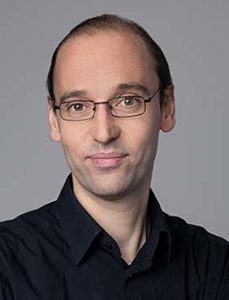
Raimund Held studied Theatre- and Media Studies as well as Sociology at FAU Erlangen-Nürnberg and Multimedia at the University of Applied Sciences Augsburg and MultimediaArt at the University of Applied Sciences Salzburg. He is a Research Fellow in Media Studies and is currently working on a dissertation focused on smart technologies. His research interests include theories of social media, user experience design, surveillance studies, virtual reality, artificial intelligence and Film studies.
Project:
With the increasing spread of social media and the enormous involvement of mobile smart devices in people’s everyday life and the living environment, different new situational or habitual media practices have evolved in the course of the 21st century. On the medial level, this development profoundly changed self- and world-relationships between the medium and the user. At the same time, it can be observed how these practices are more and more intertwined with neoliberal capitalism and how they create new ways of self-marketing rooted in consumption within an economy of affect and attention. Especially the smartphone, as a digital self- and nearbody-technology with countless apps and techological functions, and as a spatial medium for appropriation, self-representation as well as location-based orientation, supports this development as it is ideally suited to promote the entrepreneurial „digital-self“ in a competitive manner. The focus of this research project are digital dating apps and their emotional-affective network effects during the digital flirting and matching process. In this project dating apps are understood as powerful, AI-supported entities, that are based on autonomous metrication processes, which function and operate as a reward-, feedback- and reaction-system between users. The project aims to find out how the technology of the dating app structures and modifies the communicative and relationship-forming code between users and which socio-cultural media practices are suggested, reinforced and normalized through the technology. Additionally, the research also focuses on analyzing the technologically induced effects within the interaction between the structure of the app, the device, and the user as „systems of intimacy“.