



First Cohort
Yajing Cao
- E-Mail: yajing.y.cao@fau.de
Yajing Cao
- E-Mail: yajing.y.cao@fau.de

After receiving a bachelor’s degree in English, Yajing worked as a teacher in China. In 2016, she obtained the chance to study in the U.S. and Germany. With a strong interest toward languages and cultures, she joined an interdisciplinary master’s program in Luxembourg. In 2022 she joined the Research Training Group at FAU.
Project: Kite without the Line: Sentimental Analysis of the Overseas Chinese Elite Students and Intellectuals from the 1910s to the 1980s in Europe and North America (WT)
Yajing’s research aims to explore the feelings and the inner world of the overseas Chinese elite students and intellectuals from the 1910s to the 1980s in Europe and North America. During their stay in the west, some of these students and intellectuals recorded their feelings and life stories in a variety of texts such as letters, diaries, poems, memoirs, and articles, which are the fundamental research sources for this study. By analyzing these texts, their feelings and the inner world during their stay aboard can be revisited.
 Sofie Fingado completed her B.A. in Cultural History and Theory and Social Sciences as well as her M.A. in Cultural History and Theory at Humboldt-University zu Berlin, with two study semesters abroad, at the Tel Aviv University in Israel and the Københavns Universitet in Denmark. At Humboldt-Universität she has been working as a student assistant at the chair for Kulturwissenschaftliche Ästhetik und Kulturtheorie as well as an academic tutor for the introductory course Einführung in das Kulturwissenschaftliche Arbeiten. After her graduation, she received funding from the Humboldt Graduate School.
Project:
As war against a feeling, the „War on Terror“ is to be thought of not only as a caesura in terms of affective (wartime) politics but also with regard to the US penal system. At the same time, the global detention system and the internment practices of the US border regime which are being intensified after 9/11 are interwoven with the prison Industrial complex within the national borders of the US. In my project I wish to understand these democratically legitimated incarcerations and detentions as operating with a conceptualization of „single beings“, of individuated and singular persons. Following this assumption, I wish to understand the penal violence as directed against affective ties, intersubjective interdependence, and related/kinship subjectivity and as violent „family seperation“– and to shift attention to the ways in which the ones detained/incarcerated are imagining and (re)building a notion of self which is always already related and affectively entangled.
Here, children and other „minor figures“ are of specific interest, whose presence in sites of incarceration is activating and intensifying sentimental abolitionist politics on the one hand – and whose identity as being vulnerable and worthy of protection is becoming the site of negotiations on the other hand.

Axelle Germanaz is a doctoral researcher in American Studies at Friedrich-Alexander-University Erlangen-Nürnberg. She is currently working on a dissertation with the working title “Inside the Environmental Imaginary and Cultural Spaces of the White Power Movement in the United States.” Her research examines the instrumentalization of environmentalism and the deployment of sentimentality by US far-right groups in an era of climate emergency.
Project: “Inside the Environmental Imaginary and Cultural Spaces of the White Power Movement in the United States”
My doctoral thesis examines the use of environmental rhetoric, imagery, and themes in contemporary US far-right ideology and culture. I analyze the ways adherents deploy environmentalism to naturalize and legitimize white supremacism as a viable solution to the ongoing climate crisis. In this context, I further argue that the movement is relying on sentimental aesthetics and politics to disseminate its propaganda. Members tend to deploy sentimental narratives and tropes to produce strong emotional responses from their audiences and to mobilize them toward illiberal actions. My project uses an interdisciplinary methodology and a transnational approach. I rely on various fields of research –from cultural studies, affect theory, and ecocriticism, to political science, sociology, and history– to survey the intersections between environmentalism, sentimentality, and contemporary reactionary politics in the United States. Following an approach of ideology critique, I examine the multifaceted conceptualizations and representations of the environment and climate change in the cultural products disseminated by the US white power movement between the 1980s and today.
Raimund Held
- E-Mail: raimund.held@fau.de
Raimund Held
- E-Mail: raimund.held@fau.de
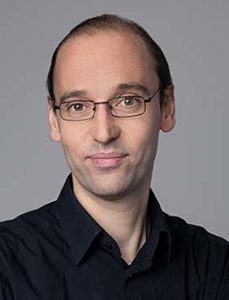 Raimund Held studied Theatre- and Media Studies as well as Sociology at FAU Erlangen-Nürnberg and Multimedia at the University of Applied Sciences Augsburg and MultimediaArt at the University of Applied Sciences Salzburg. He is a Research Fellow in Media Studies and is currently working on a dissertation focused on smart technologies. His research interests include theories of social media, user experience design, surveillance studies, virtual reality, artificial intelligence and Film studies.
Project:
With the increasing spread of social media and the enormous involvement of mobile smart devices in people’s everyday life and the living environment, different new situational or habitual media practices have evolved in the course of the 21st century. On the medial level, this development profoundly changed self- and world-relationships between the medium and the user. At the same time, it can be observed how these practices are more and more intertwined with neoliberal capitalism and how they create new ways of self-marketing rooted in consumption within an economy of affect and attention. Especially the smartphone, as a digital self- and nearbody-technology with countless apps and techological functions, and as a spatial medium for appropriation, self-representation as well as location-based orientation, supports this development as it is ideally suited to promote the entrepreneurial „digital-self“ in a competitive manner. The focus of this research project are digital dating apps and their emotional-affective network effects during the digital flirting and matching process. In this project dating apps are understood as powerful, AI-supported entities, that are based on autonomous metrication processes, which function and operate as a reward-, feedback- and reaction-system between users. The project aims to find out how the technology of the dating app structures and modifies the communicative and relationship-forming code between users and which socio-cultural media practices are suggested, reinforced and normalized through the technology. Additionally, the research also focuses on analyzing the technologically induced effects within the interaction between the structure of the app, the device, and the user as „systems of intimacy“.

Khushboo Jain has worked extensively towards securing rights of children in contact with railways in India including through a petition in the Delhi High Court. She is the Founding member of the All India Working Group for Rights of Children (AIWGRC), an alliance founded in June 2014 with an objective to empower children through facilitating child participation in legal reforms. Her PhD research, Home-making on the Streets of Delhi, offers a critique of the narratives of homelessness through ethnographically rich research on the practices of home-making on the streets.
Project: Home-making on the Streets of Delhi‘
‘Home-making on the Streets of Delhi’ is a deep ethnographic study of the everyday home-making practices of the street dwellers in the capital city of Delhi, India. Home-making on the streets is infused by the moral sentiment of an international narrative of home and homelessness and vexed political motivations of clean urban streets. And between these extremes lie the everyday negotiation of practices of home-making on urban streets. By exploring street dwelling in three different kinds of space – of worship, market and a railway station, this dissertation examines how different street spaces become home for its inhabitants, how the material and social space aid in the processes of home-making, and how street dwellers add to the character and the economy of these spaces. It further evaluates how the street as a space of home-making is understood in policies and interventions for street-dwellers as a way to deepen the critique of the narratives of homelessness.
 Andrea Klinger studied German-French Studies, a binational bachelor program of the German-French University, at the Universities of Regensburg and Nice. After completing her Master’s degree in Intercultural European Studies at the University of Regensburg, she taught German for one year at the renowned Grande École École normale supérieure de Lyon (ENS de Lyon) and worked at the University of Trier as a research project assistant in the field of transnational European education. Her research interests primarily focus on French political culture, democracy studies as well as European integration.
Project: Politics, Language, and Emotions: French Democracy Between Governmental Crisis, Affective Polarization, and the Appeal of Sentimentality
Andrea’s research project examines the use of sentimental codes in political discourse in France, analyzing and contextualizing their forms and functions against the background of political polarization and the narrowing of the political center in the country. Her research project aims to contribute to the current state of research on the erosion of liberal democracy and, with its focus on the political language of influential political actors, offers an in-depth discourse-analytical investigation of different sentimentally coded affirmative strategies, understood as possible explanatory factors for the strengthening of the political fringes and the phenomenon of affective polarization in France. The project hence aims to identify and examine sentimentally coded stimuli in political rhetoric by also focusing on affectively charged founding myths, ideologically underpinned narratives of national and collective identities as well as cultural heritage. It aims to assess the impact of such (re-)constructions and (re-)contextualizations of national and collective memory practices, especially with regard to their mobilizing function when activating emotional knowledge.

Annika holds a master’s degree in English and American Studies from Bamberg University. She is a PhD candidate in American Studies and is currently working on a dissertation focused on sentimentality and eating disorders in US culture. Her research interests include theories of race and racism, affect theory, gender and body studies, and popular culture.
Project:
The construction of different racialized bodies, such as the fragile, thin, white female body as opposed to the non-white, voluptuous and sexually threatening female body, is a dominant trope in 18th and 19th century sentimental novel. In my doctoral thesis, I regard these different constructions of the female body as a sentimental code that promotes certain racial stereotypes and sentiments. I will, therefore, investigate how sentimental tropes such as the construction of white and non-white female bodies in British and American sentimental fiction from the 18th and 19th century contribute to the construction of modern body images in contemporary American fiction and movies about eating disorders. Moreover, I aim at exploring the impact these thus constructed and coded body images have on both white and non-white women, starting with the emotions these body images evoke up to more severe social and political consequences. The research topic is situated in different discourses, including Affect Theory, Critical Race Theory, Critical Whiteness Studies, Body Studies, and Foucauldian discourse analysis.
Zixiong Lin
- E-Mail: zixiong.lin@fau.de
Zixiong Lin
- E-Mail: zixiong.lin@fau.de
LIN Zixiong holds an MA in History and Politics of the 20th Century from Friedrich-Schiller-University in Jena. He also studied Modern Chinese Studies at the University of Freiburg and holds a BA in History from Heilongjiang University. His research interests primarily focus on Chinese social, political and intellectual history in the Maoist era.
Project: Emotions in Maoist China: State Mobilization and Local Response in the Socialist Education Campaign (1962-1966)
The massive mobilization of emotions plays a decisive role in the Communists’ revolutionary victory. Mao Zedong attached great importance to emotional works and intended to ignite the passion of Chinese ordinary popularity to serve the revolutionary purpose by launching a succession of massive campaigns. This project selects the Socialist Education Campaign (SEC) as the case for illustration. By drawing “history of emotions” as a theoretical approach I envisage developing a sketch of the CCP’s emotional regime and evaluating its influence on reshaping the state of emotions among normal Chinese people. To carry out this study, I plan to collect resources from two domains: institutional archives and ego-documents focusing on personal letters and diaries to reveal the sentimental interaction between the regime and the popularities.

Charleena Schweda holds a B.A. and M.A. in English and American Studies and General and Comparative Literature. Having studied at the Ruhr-Universität Bochum (RUB) and the University of Limerick, Ireland (UL), she joined the research training group as a doctoral researcher in English Studies in 2022. Aside from her position at the RTG, she works as a research assistant at the Chair of American Studies: Culture and Literature and as a lecturer at the Chair of English Studies: Culture and Literature.
In her research, she studies anglophone culture, literature, and film, particularly around the turn of the millennium and in the Victorian era. She specialises in Gender Studies, Queer Studies and popular culture, with a focus on representations of womanhood, girlhood, and queerness in horror and monster texts. During her studies she worked as both a journalist and an editor and functioned as a student representative for the Department of General and Comparative Literature. She interned at the Goethe-Institut Irland and the Nuremberg International Human Rights Film Festival, among others.
Project: “Hell Is a Teenage Girl”: The Sentimental in Female Coming-of-Age Monster Films
Monsters have always roamed the worlds of fiction, mythology, and religion. Ambiguous and multi-coded, they function as playgrounds for discussions on socio-cultural issues. When monsters appear as adolescent girls, these negotiations centralise their gender, focusing on themes such as girlhood, the female body, sexuality, gender roles, and, above all, the experience of coming-of-age as a girl. Monstrosity becomes an allegory for puberty; the ‘horrors’ of coming-of-are are aligned with the horrors of monstrosity.
In this context, my project explores how the sentimental emerges and functions in what I loosely regard to be the subgenre of female coming-of-age monster films: Horror films which explore intimacy, girlhood, and emotionality through the metaphorically charged concept of female monstrosity. Within this specific framework, the sentimental operates as an aesthetic and narrative mode that I call “sentimental monstrosity”. To identify its diverse functions, I explore a range of anglophone horror films from the early 21st century, combining close readings of these individual films with a comparative approach that regards literary, filmic, and cultural traditions from the early 19th century until today.
 Theresa holds a master’s degree in Cultural Studies from the University of Leipzig and worked as a research assistant during her studies. Afterwards she received funding in form of a research proposal scholarship from the Gutenberg Graduate School of the Humanities and Social Sciences at the University of Mainz. Her research interests include cultural sociology, digital media, popular culture, and memory culture.
Project: “Caring for Yourself in Times of Crisis” – Self-Care as a Media Discourse Phenomenon between Affirmation and Social Criticism (WT)
My PhD project seeks to investigate the ambivalent meanings of “self-care” in media discourse, which tend to oscillate between legitimate individual coping-strategy in times of permanent/multiple crisis and critical assumptions about (neoliberal) self-optimization. In doing so, I am interested in how self-care is characterized and problematized in this critical discourse and how in this context, primarily feminist-intended conceptions of self-care are justified and reclaimed as political counter-practice. I will focus on analyzing the specific imaginations and interpretations of “the self” and society that can be found both in general articulations of self-care as necessity and its critical reception, mostly referring to a perceived state of deficit, exhaustion, and collective suffering. Through the lens of the sociology of knowledge and emotion, the project asks how these findings (and feelings) are significantly justified by means of time-diagnostic observation and how sentimental narratives and ideas are effective here.
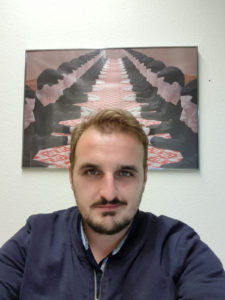 Vincent Steinbach studied sociology and German at FAU Erlangen-Nuremberg. During a stay abroad in Nijmegen, Netherlands, he also studied communication science and sociology at Radboud University. Since April 2019, Vincent Steinbach has been involved in the institutionalization of the Digital Humanities course at FAU Erlangen-Nuremberg. Vincent has also worked in the training of teachers in the field of politics and society. In addition, Vincent Steinbach has been a researcher with the EFI project Discourses and Practices of Digital Sovereignty since April 2019. Vincent Steinbach has been pursuing his research interests in sociological theory, communication and media sociology as well as digitization since October 2022 as part of the DFG Research Training Group The Sentimental in Literature, Culture and Politics.
Project: „Mama, don’t get vaccinated!“ – Forms and functions of the sentimental in the staging of valid knowledge using the example of the vaccination campaign in Germany
The project focuses on the question of how content in online videos is staged as valid knowledge. That depends on the media used for staging and dissemination. Of particular interest is the role played by affects and especially sentiment when it comes to staging something as valid knowledge in online videos. To do this, the concept of the sentimental must first be translated from the cultural-scientific discourse into the social-theoretical discourse before the forms and functions of the sentimental in the staging can be examined. Different staging strategies are empirically examined using the example of two media-prominent and emotionally charged bodies of knowledge: the debate about the CoVid 19 pandemic and the CoVid 19 vaccine. Specifically, it is about content in online videos. Video analyzes and situation analyzes sensu Adele Clarke are carried out to describe and relate the forms and functions of the sentimental in online videos. To reconstruct the staging strategies, the producers of online videos are interviewed as part of expert interviews.
 Antonia studied Economics and Arabic Studies at the University of Applied Sciences of Bremen and at the Al-Akhawayn University in Ifrane, Morocco. Afterwards, she completed her Master’s degree in Middle Eastern Studies with a focus on Political Science at FAU Erlangen-Nuremberg. She already participated in the research project „Wechselwirkungen“ of EZIRE as well as in the VW project „Global autocratic collaboration in times of COVID19“ under the direction of Thomas Demmelhuber. Antonia is fluent in English and Arabic.
Autocracies, the Temptation of Sentimentality and the Consolidation of Collective Identities in Gulf Monarchies
In her research project, Antonia examined the forms and functions of sentimentality in the consolidation of collective identities, using selected Gulf monarchies (Saudi Arabia, Qatar, and Kuwait) as case studies. She analyzed emotions and affects, as well as sentimentality as a relational communicative code that oscillates between past and present. The project investigated affect-driven civic engagement in processes of state transformation in the Gulf in light of multiple global crises like the looming post-oil era. She thus addressed gaps in existing research on the non-material modes of political order and regime survival.
A central focus lay on how memory practices within new cultural heritage projects activate emotional knowledge by drawing on historically shaped repertoires that are pre-structured by social and political norms as well as national ideological markers. Accordingly, the project examined sites of sentimentality in the cultural sector and in the context of national holidays. Emphasizing the reciprocal nature of sentimentality, the study adopted a tentative bottom-up approach by investigating affective responses through affect-ethnographic field research in the respective countries.
 Elsa-Margareta holds a master’s degree in Media Studies from the Universität Regensburg. During her studies she worked as a lector for the German online newspaper ShortNews, as a film editor for the website Save.TV and as a freelance author. In 2021 she gained experience as a research fellow at the Institute of Media Studies at Philipps-Universität Marburg. Her research interests include Film Studies, Quality Television and Fan/Cultural Studies.
Project: Ineffable Husbands – Die Inszenierung des Sentimentalen in Buddy-Filmen und -Serien. Versuch einer Systematisierung (WT)
The dissertation project deals with the research desideratum of examining the staging of the sentimental in English-language buddy films and series. The aim of the project is to determine how texts of this genre affect the viewer through their aesthetic design and narrative structures and thus stimulate emotional appropriation processes and participatory culture, especially the writing of fanfictions.The main interest lies in such fanfictions in which fans transform two characters, who in the original texts are linked by a heterosexual friendship (“buddies”), into a homosexual couple and create a love story. The project aims to analyze what prompted fanfiction authors to take this narrative step. However, not only the forms of the sentimental should be examined, but also its functions. The aim is to investigate whether and why media makers use certain aesthetics and narrative strategies in a targeted manner – for example, so that the discussion of their media texts through the creative appropriation processes of the fans continues many years after their release.
 Hana holds a bachelor’s degree in English and American Studies as well as French Philology. She completed the bilingual master’s program The Americas/Las Américas at FAU Erlangen-Nuremberg, spending a semester abroad at Universitat de València, Spain. During her studies she worked as a research assistant and tutor. Hana’s primary research interests include hip hop studies, feminist theory, as well as representations of race and gender in (popular) culture and literature of the Americas.
Project:
Although sentimental tropes are commonly used in American music, hip hop culture is still frequently viewed as a non- (or even anti-) sentimental art form. In an attempt to counter this notion, my PhD project sets out to examine the sentimental dimension in hip hop culture. I propose not only that hip hop does, in fact, have sentimental traits, but also that there has been a sentimental turn in its culture in recent years. Most prominently, this phenomenon can be seen in the emergence and growing popularity of the emo-rap subgenre. Moreover, it can also be observed with respect to the ubiquitous nostalgia of contemporary hip hop culture, which is particularly reflected in the romanticization of the movement’s beginnings and the iconization of deceased rappers. Like much activist art, hip hop aims to mobilize compassion among its audience to achieve certain political goals, seeking to humanize marginalized groups by means of popular sentimental tropes. Therefore, the contribution I intend to make with this dissertation is to identify and systematically explore sentimental elements in works by American rappers in order to analyze their forms and function.

Andrew is from Annapolis, Maryland, where he studied at Anne Arundel Community College and St. Mary’s College of Maryland and graduated in 2017. He received an MA in North American studies from FAU in 2021. Since 2022, he has been a research associate in “The Sentimental,” where he submitted his dissertation—“American Malleability: Aesthetics and Politics of Change in U.S. Literature and Print, 1820–1870”—in June 2025. His doctoral work in “The Sentimental” has been supported by research stays as a Packer Fellow at the American Antiquarian Society, a Thoreau Society Fellow, and a BAA Postgraduate Fellow at Harvard. His research has been published in Amerikastudien, Iperstoria, and ZAA. He is co-editor of the literary journal The TRIAL and his poems have been published in The Yale Review, Oxford Poetry, and Lana Turner. His new postdoctoral project, “American Primordial,” examines American origin stories from the seventeenth to the twenty-first century.
Project: American Malleability: Aesthetics and Politics of Change in U.S. Literature and Print, 1820–1870
Submitted in June 2025, my PhD examines the relation between print and ideology in the United States in the wake of profound transformations to both print technology and political economy in the final years of the 1820s. New people got access to new machines—and new ideas were born, which still stubbornly impact the world we live in. I thus examine the respective engagements of “malleability”—or, the aesthetics and politics of change—in texts by authors including Margaret Fuller, Frederick Douglass, William Apess, and John Rollin Ridge, as well as in newspapers across the middle part of the century. From the Cherokee Nation to California to the countryside of Massachusetts, print texts contest debates over navigating novel political arrangements. In reading these curious texts comparatively, I argue, we might find important origins of the affective arrangements of modern political life.