



Index
Yajing Cao

After receiving a bachelor’s degree in English, Yajing worked as a teacher in China. In 2016, she obtained the chance to study in the U.S. and Germany. With a strong interest toward languages and cultures, she joined an interdisciplinary master’s program in Luxembourg. In 2022 she joined the Research Training Group at FAU.
Project: Kite without the Line: Sentimental Analysis of the Overseas Chinese Elite Students and Intellectuals from the 1910s to the 1980s in Europe and North America (WT)
Yajing’s research aims to explore the feelings and the inner world of the overseas Chinese elite students and intellectuals from the 1910s to the 1980s in Europe and North America. During their stay in the west, some of these students and intellectuals recorded their feelings and life stories in a variety of texts such as letters, diaries, poems, memoirs, and articles, which are the fundamental research sources for this study. By analyzing these texts, their feelings and the inner world during their stay aboard can be revisited.
Program

Postdoctoral Researchers

Sarah is a cultural sociologist specializing in questions of emotion sociology and theories of subjectification. She holds an M.A. in German philology and a B.A. in sociology from the University of Vienna. She previously worked as a research associate at the Institute of Sociology (Chair of Prof. Dr. Sighard Neckel) at Goethe University Frankfurt and the University of Hamburg, where she also completed her PhD. In her dissertation, Gefühlstechniken. Eine Kultursoziologie emotionaler Selbstvermessung (2024), she examined mood-tracking apps as an instructive case for analyzing contemporary emotion culture and developed a research program for the cultural-sociological study of apps. Beyond mood tracking, her work engages with topics such as sustainability, self-optimization, sociological diagnoses of contemporary societies, the role of emotions in political culture, and the aestheticization of so-called “lost places.”
She is currently a postdoctoral researcher in the interdisciplinary DFG Research Training Group 2726 The Sentimental in Literature, Culture, and Politics at Friedrich-Alexander-Universität Erlangen-Nürnberg, where she is developing a sociological concept of the sentimental. Drawing on cultural-studies perspectives, she is particularly interested in what dimensions of emotional experience and social life come into view when the sentimental is approached through sociological theories and methods—and when it is taken seriously as an analytical lens for studying empirical phenomena, beyond its conventional normative reductions (for instance, as feminine, trivial, or merely staged).
For further insights into her sociological framework of the sentimental, see her chapter “A Cultural Sociology of the Sentimental: The Example of ‘Lost Places’” in the volume Sentimental State(s). Affective Politics of Order and Belonging (transcript 2025), which she co-edited with Heike Paul. You can also listen to an interview with her on the Podcast Thoughts on Feelings.
For more on publications, talks, and teaching: https://www.soziologie.phil.fau.de/institut/team/pritz/
Coordination
Jana Aresin, M.A.
Institut für Anglistik und Amerikanistik
Lehrstuhl für Amerikanistik, insbesondere nordamerikanische Literatur- und Kulturwissenschaft (Prof. Dr. Paul)
- Phone number: +49913185-23421
- Email: jana.aresin@fau.de
Institut für Anglistik und Amerikanistik
Lehrstuhl für Amerikanistik, insbesondere nordamerikanische Literatur- und Kulturwissenschaft (Prof. Dr. Paul)
Researchers
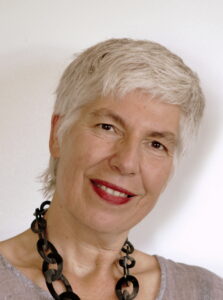
Prof. Dr. Heike Paul
Institut für Anglistik und Amerikanistik
Lehrstuhl für Amerikanistik, insbesondere nordamerikanische Literatur- und Kulturwissenschaft (Prof. Dr. Paul)
- Phone number: +49 9131 85-22437
- Email: heike.paul@fau.de
- Website: https://www.angam.phil.fau.de/fields/amst/culture/staff/heike-paul/
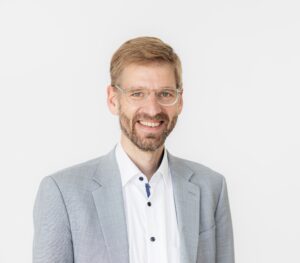
Prof. Dr. Thomas Demmelhuber
Institut für Politische Wissenschaft
Lehrstuhl für Politik und Gesellschaft des Nahen Ostens
- Phone number: +49 9131 85-22315
- Email: thomas.demmelhuber@fau.de
- Website: https://www.pol.phil.fau.de/person/thomas-demmelhuber/
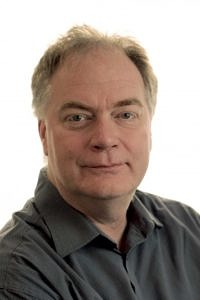
Prof. Dr. Kay Kirchmann
Institut für Theater- und Medienwissenschaft
Lehrstuhl für Medienwissenschaft (Prof. Dr. Kirchmann)
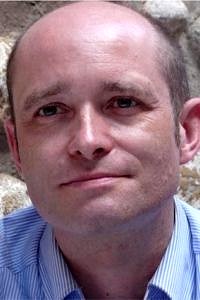
Dr. Christian Krug
Department of English and American Studies
Chair of English Literature and Culture (Prof. Dr. Feldmann)
- Phone number: +49913185-22932
- Email: christian.krug@fau.de
- Website: https://www.angam.phil.fau.de/fields/enst/litcult/staff/christian-krug/
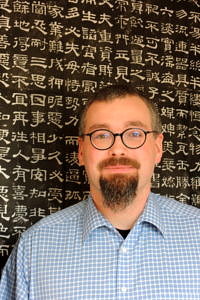
Professor Dr. Marc Matten
Institut für Sprachen und Kulturen des Nahen Ostens und Ostasiens
Lehrstuhl für Sinologie mit dem Schwerpunkt Geistes- und Kulturgeschichte Chinas (Alexander von Humboldt-Professur)
- Phone number: +49 9131 85-22445
- Email: marc.matten@fau.de
- Website: https://www.sinologie.phil.fau.de/mitarbeiter/professuren/prof-dr-marc-matten/
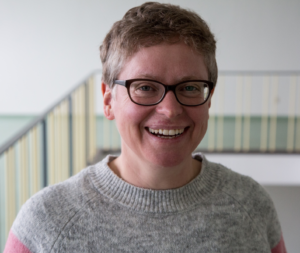
Prof. Dr. Silke Steets
Technische Universität Berlin
Institut für Soziologie
- Phone number: +49030314-25291
- Email: s.steets@tu-berlin.de
- Website: https://silke-steets.de/
DFG Research Training Group – The Sentimental in Literature, Culture, and Politics

DFG Research Training Group
The research training group examines forms and functions of the sentimental in synchronic and diachronic perspectives. We conceive of the sentimental as a communicative and relational code which can draw on emotional knowledge and activate empathy. This code can be observed and studied in different fields of symbolic interaction, i.e. aesthetic-literary, politico-rhetorical, medially staged and as part of socially effective discourses and practices. With a comparative perspective, the research training group focuses both on culturally specific uses and on inter- and transcultural processes of appropriation of this code in national and transnational contexts. The sentimental unfolds its power as aesthetic mode of representation and as sociopolitical strategy of interpellation in literary and non-literary texts, as a means of cultural crisis- and contingency-management, and as a strategy of political mobilization, for example in protest movements and populist rhetoric… More…
Activities & Publications
Sentimental State(s) Named a Top 5 Book by International Affairs!
Our edited volume Sentimental State(s) was featured in a January book review in International Affairs and selected as one of the journal’s “Top 5 Books.”
You can read the full review here.
New Publication!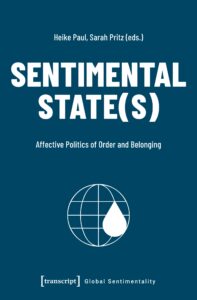
The third book in transcript’s Global Sentimentality series was published in August 2025: Sentimental State(s): Affective Politics of Order and Belonging, edited by Heike Paul and Sarah Pritz. The volume is available in print and open access here. It includes contributions from GRK2726 members and fellows, including Anna Corrigan, Thomas Demmelhuber, Christian Krug, Sarah Marak, Marc Andre Matten, Heike Paul, Sarah Pritz, Elaine Roth, Charleena Schweda, Vincent Steinbach, Antonia Thies, among others.
Guest Lecture: Elaine Roth (Indiana University South Bend): „Women in Silent Film“
09.07.2025, 10.15 am, room C202, Bismarckstr. 1, 91054 Erlangen
Guest Lecture: Olaf Zenker (University Halle-Wittenberg): „Digital Infrastructuring and Bureaucratic Sentiments in German Migration Management“
07.07.2025, 2.15 pm, room C202, Bismarckstr. 1, 91054 Erlangen
Guest Lecture: Haiyan Lee (Stanford University): „To Kill a Tiger: On Fearing Ferocious Animals in the Anthropocene“
23.06.2025, 2.15 pm, room C202, Bismarckstr. 1, 91054 Erlangen
Cynthia D. Porter: „Fury“
21.05.2025, Filmhaus Nürnberg, Screening of Fury (1936) with an introduction by Cynthia D. Porter.
Guest Lecture: Cynthia D. Porter (Ohio State University): „From Protection to Persecution: Fritz Lang’s Fury (1936) and the Perils of Sentimentality in Policing“
21.05.2025, 10.15 am, room C202, Bismarckstr. 1, 91054 Erlangen
Guest Lecture: Orlaith Darling (UC Dublin): „The Sad Girl Novel, or, what’s the point of art?“
30.04.2025, 10.15 am, room C202, Bismarckstr. 1, 91054 Erlangen
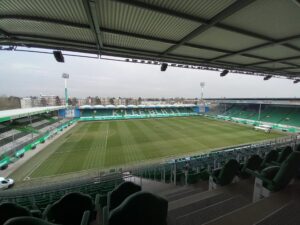
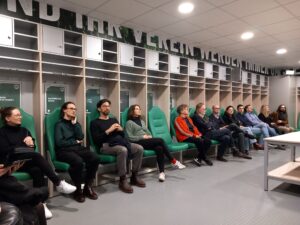
Conference: „Football Sentimentality: Das Fußballstadion als sentimentaler Raum“
On 10.02.2025, the research training group held a conference on the football stadium as a sentimental space at Sportpark Ronhof / SpVgg Greuther Fürth.
Find the full program and the introduction by Dr. Christian Krug here.
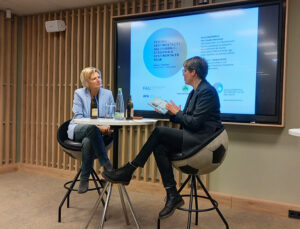
Guest Lecture: Brigitte Bargetz (WU Wien): „‚Holding Out for A Hero‘: The Sentimental Politics of Popular Culture“
13.01.2025, 2.15 pm, room C601, Bismarckstr. 1, 91054 Erlangen
Katharina Gerund: „Far From Heaven“
23.01.2025, Filmhaus Nürnberg, Screening of Far From Heaven (2002) with an introduction by Katharina Gerund.
Guest Lecture: Anna Corrigan (University of Cambridge): „Sentimental and Political Recognition in the Family Photo Album: Three Case Studies“
18.12.2024, 10.15 a.m., room A602, Bismarckstr. 1, 91054 Erlangen
Guest Lecture: Kimberly Juanita Brown (Dartmouth College): „Grief in the Dark“
09.12.2024, UB Ausstellungsraum, Schuhstraße 1a, 91054 Erlangen
Guest Lecture: Sigal Yona (Ghent University): „Melodrama, Memory, and Sense(s) of Proximity: A Single Case Study“
04.12.2024, 10.15 a.m., room A602, Bismarckstr. 1, 91054 Erlangen
Guest Lecture: Elaine Roth (Indiana University): „Civil Sentimentalism in Epidemic Media, from Contagion (2011) to The Last Of Us (2013; 2023) and Station Eleven (2014; 2021)“
02.12.2024, 2.15 p.m., room C601, Bismarckstr. 1, 91054 Erlangen
Guest Lecture: Ethel Matala de Mazza (Hu Berlin): „Schwarze Reportagen. Muckraking in Berlin und Wien um 1900“
29.10.2024, 6 p.m., Wassersaal Orangerie, Erlangen
Joint Conference: „The Poetics and Politics of Family Feelings“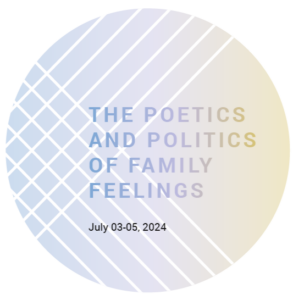
03.-05.07.2024, Lyrik Kabinett and Siemens Stiftung Munich. In cooperation with the research training group 2845 „Family Matters – Figuren der Ent-bindung.“ With keynotes by Elisabeth Bronfen, Elahe Haschemi Yekani, and Rebecca Wanzo.
Find the full program here.
Laura Hindelang (Universität Bern): „Exploring Nostalgia and Belonging in Architecture and Urban Visual Culture of the Arabian Peninsula“
17.06.2024, 14.15 p.m., room C 601, Bismarckstr. 1, 91054 Erlangen
Clara Dawson (Global Sentimentality Project Fellow): „Sentimental Narratives: Taxidermy, Museums, and Poetry in the 19th Century“
29.05.2024, 10.15 a.m., room C 601, Bismarckstr. 1, 91054 Erlangen
Manuel Vogelsang (Global Sentimentality Project Fellow): „Revisiting the Archive, Excessively! Melodrama, Excess, and the Archive of the American Imaginary“
24.04.2024, 10.15 a.m., room C 601, Bismarckstr. 1, 91054 Erlangen
New Publication!
Elsa-Margareta Venzmer’s article „Ineffable Husbands. Sentimental Queerbaiting in the TV Series Good Omens“ was published in March 2024 in the latest ffk Journal.
Theresa Nink (SFB Transformationen des Populären/Siegen): „Kuschelrock als Low Pop? Sentimentale Balladen in populärer Musik“
05.02.2024, 2.15 p.m., room C601, Bismarckstr.1, 91054 Erlangen
Anna-Rose Shack (Global Sentimentality Project Fellow): „“She is the first sentimental writer in the English Language”: Katherine Philips’ nineteenth-century reception and the sentimental tradition“
24.01.2024, 10.15 a.m., room C 601, Bismarckstr.1, 91054 Erlangen
Global Melodrama – Das Melodram im Weltkino: Season 4 at Filmhaus Nürnberg!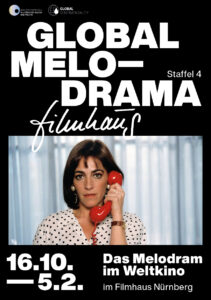
Women on the Verge of a Nervous Breakdown (Spain, 1988) – 16.10.2023, with an introduction by Rama Srinivasan (Global Sentimentality Project)
Tokyo Story (Japan, 1953) – 30.10.2023, with an introduction by Alexander Knoth (Japancuts.de)
Suffragette (GB, 2015) – 11.12.2023, with an introduction by Sarah Miriam Pritz (GRK 2726)
Coming Out (GDR, 1989) – 15.01.2024, with an introduction by Theresa Siebach (GRK 2726)
An Unmarried Woman (USA, 1978) – 05.02.2024, with an introduction by Florian Mundhenke (FAU Erlangen-Nürnberg)
Robert Tsaturyan (Global Sentimentality Project Fellow): „Trauma, Politics, and the ‚Aesopic Language‘ in Contemporary Chinese Poetic Thought“
21.11.2023, Room 00.112, Artilleriestraße 70, 91052 Erlangen
Elsa-Margareta Venzmer: „Sentimentale Abhängigkeiten zwischen FernsehproduzentIn und Fan: Zum Verhältnis von Queerbaiting, Affekt und Fandom“
30.09.2023, Jahrestagung der Gesellschaft für Medienwissenschaft, „Abhängigkeiten“. Rheinische Friedrich-Wilhelms-Universität Bonn.
Conference: Sentimental State(s) – Sentimental Politics of Order and Belonging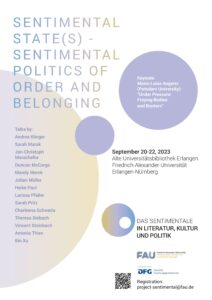
September 20-22, 2023, Alte Universitätsbibliothek Erlangen
Find the full program here.
Panel: „Sentimental Songs as Political Interventions“
Siegen University, September 13-14, 2023.
Heike Paul, Hana Vrdoljak and Andrew Wildermuth will present their research on „Sentimental Songs as Political Interventions“ at the conference „‚You are beautiful, no matter what they say.‘ Sentimental Ballads in Popular Music“ organized by the SFB 1472 „Transformationen des Populären.“
New Publication!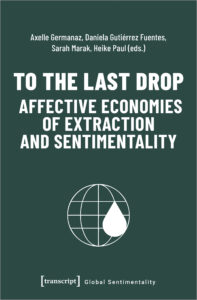
The second book in transcript’s Global Sentimentality book series was published in July 2023: To the Last Drop: Affective Economies of Extraction and Sentimentality, edited by Axelle Germanaz, Daniela Gutiérrez Fuentes, Heike Paul, and Sarah Marak. The volume is available with open access here. With contributions from Cara Daggett, Katie Ritson, Gesa Mackenthun, Heike Paul, Sarah Marak & Axelle Germanaz, among others.
Guest lecture: Johannes Salim Ismaiel-Wendt (U of Hildesheim): „Translating Sonic Orientalism: Schwer mit den Schätzen des Orients in Westfalen beladen“
17.07.2023, 2.15 p.m., Bismarckstr. 1, Erlangen (room C 601)
Guest lecture: Weihong Bao (UC Berkeley): „The Productivity of Life: Shanghai Film Studio in the 1930s“
12.07.2023, 2.15 p.m., Bismarckstr. 1, Erlangen (room C 601)
Guest lecture: Melanie Sindelar (University of Vienna): “Replicating Exclusion through Art: Belonging, Sentimentality, and Navigating Temporary Eternities among Dubai’s Artists”
10.07.2023, 2.15 p.m., Bismarckstr. 1, Erlangen (room C 601)
Guest lecture: Ruth Barratt-Peacock and Sophia Staite (FSU Jena, U of Tasmania; GSP Fellows): „The Forbidden Affects of Children’s Melodrama in Japanese Superhero Franchise Kamen Rider.“
05.07.2023, 10.15 a.m., Bismarckstr.1, Erlangen (room C 601)
Guest lecture: Katy Hull (GSP Fellow; U of Amsterdam): „‚Raging Energy for the Fight‘: Anger and Activism in Angela Davis’s Autobiography“
03.07.2023, 2.15 p.m., Bismarckstr. 1, Erlangen (room C 601)
Guest lecture: Ana Mateos (GSP Fellow): „The Rhetorics of Grief in The History of Mary Prince, A West Indian Slave (1831): An Analysis of its Different Constructions and Meanings“
17.05.2023, 10.15 a.m., Bismarckstr 1, Erlangen (room C 601)
Guest lecture: Anthony J. Obst (GSP Fellow; FU Berlin): „Scottsboro Sentimentalism and the Problem of Innocence“
10.05.2023, 10.15 a.m., Bismarckstr. 1, Erlangen (room C 601)
Global Melodrama – Das Melodram im Weltkino: Season 3 at Filmhaus Nürnberg!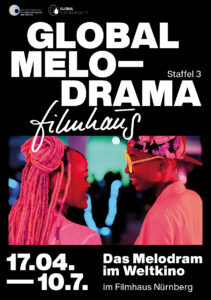
Casablanca (USA, 1947) – 17.04.2023, with an introduction by Kay Kirchmann
Dorian Gray im Spiegel der Boulevardpresse (BRD, 1984) – 15.05.2023, with an introduction by Stefanie Diekmann
In the Mood for Love (HK, F, TH, 2000) – 12.06.2023, with an introduction by Norbert Schmitz
Rafiki (Kenia, 2018) – 10.07.2023, with an introduction by Claudia Böhme
Katharina Gerund: „Guess Who’s Coming to Dinner?“
05.04.2023, Filmhaus Nürnberg. Screening of Guess Who’s Coming to Dinner with an introduction by Katharina Gerund.
Heike Paul, „Zur Deutungsmacht des Sentimentalen in Zukunftsnarrativen“
30.03.2023, 8.30 a.m. Talk at the final conference of the DFG-funded research training group „Deutungsmacht. Religion und belief systems in Deutungsmachtkonflikten“ titled „Deutungsmacht von Zukunftsnarrativen.“ Rostock University.
New publication!
Antonia Thies and Thomas Demmelhuber published their paper „Autocracies and the temptation of sentimentality: repertoires of the past and contemporary meaning-making in the Gulf monarchies“ in Third World Quarterly (2023). The article is available online; DOI: https://doi.org/10.1080/01436597.2023.2171392.
Guest lecture: Nele Sawallisch (Trier U): „Comedy, Nation, Sentimentality. Civil Sentimentalism and the Politics of Laughter“
01.02.23, 10.15 a.m. (C 301). To register please send an email to project-sentimental@fau.de.
Guest lecture: Rama Srinivasan: „Love, Longing and Affective Attachments in the South Asian Diaspora“
18.01.23, 10.15 a.m. (C 301). To register please send an email to project-sentimental@fau.de.
Guest lecture: Frank Kelleter (John-F.-Kennedy-Institut, FU Berlin): „Civic Indignation, 1765-1825: On the Rhetoric of White Liberal Self-Sentimentalization“
16.01.23, 14.15 p.m. (C 601). To register please send an email to project-sentimental@fau.de.
Kay Kirchmann & Elsa-Margareta Venzmer: „‚We‘re partners. What happens to you,
happens to me.‘ Buddies im Spielfilm.“
16.01.22, 6p.m., Ringvorlesung „Interdisziplinäre Zugänge zu Freundschaft zwischen Gleichheit und Differenz II. Kollegienhaus 1.019, Universitätsstraße 15, Erlangen.
Guest lecture: Christian Junge (Marburg): „Affective Readings! The Scandals of Aswany’s Bestseller ‚The Yacoubian Building‘ from Literary Text to Social Media“
21.11.22, 2p.m.
Global Melodrama Film Series, season II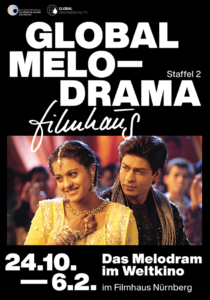
Our film series in cooperation with the Filmhaus Nürnberg continues in the winter term of 2022 with 5 films from around the globe:
Garm Hava (India, 1974) – 24.10.2022, with an introduction by Rama Srinivasan
Ganga Bruta (Brazil, 1933) – 14.11.2022, with an introduction by Ana M. López
You’ve Got Mail (USA, 1998) – 12.12.2022, with an introduction by Silke Steets
Hiroshima Mon Amour (France, 1959) – 16.01.2023, with an introduction by Axelle Germanaz
Sometimes Happy, Sometimes Sad (India, 2001) – 06.02.2023, with an introduction by Mita Banerjee
Workshop: Civil Sentimentalism in the Americas
09.11. – 11.11. 2022, Amerikahaus Munich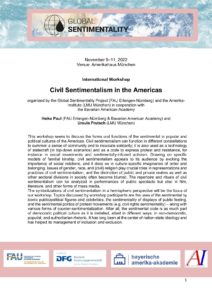
Organized by the Global Sentimentality Project (FAU Erlangen–Nürnberg) and the Amerika–Institute (LMU München) in cooperation with the Bavarian American–Academy. Read a student review of the conference here.
Global Sentimentality Lecture Series no. III
01.06.2022, 10 a.m.: Deidre Pribram (GSP Fellow, Molloy College): „Sentimentality and Sensationalism: Screening Melodrama“
29.06.2022, 10 a.m.: Claudia Breger (Columbia U): „Anti–Sentimental Animations: Watchmen’s (2019) Archival Politics in the Folds of Supremacist Revival and Institutional Repair“
13.07.2022, 10 a.m.: James A. Godley (GSP Fellow, Dartmouth College): „The Alienated Labor of Mourning: Mary Rowlandson and the Death of King Philip“
Global Melodrama – Das Melodram im Weltkino: Film series in cooperation with the Filmhaus Nürnberg
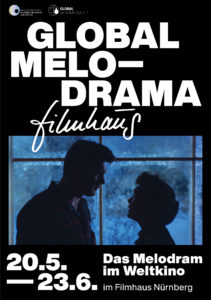
The film series Global Melodrama – Das Melodram im Weltkino presents 10 melodramas, from classical Hollywood to contemporary melodrama, and from different cultural contexts. The films will be shown in original language versions with either German or English subtitles at the Filmhaus Nürnberg on eight evenings, between May 20th and June 23rd. Most screenings will be accompanied by a short introductory talk given by renowned experts and members of the Global Sentimentality Project. For the full program and more information read the full program here.
„Sentimentalität erfahren – Experiencing Sentimentality“
The event at the Lange Nacht der Wissenschaften 2022 was organized by Global Sentimentality Project member and PI in the RTG, Kay Kirchmann. It was based on films and installations made by students in Prof. Kirchmann’s seminar „Tränen/Tears“. With the participation of Christian Krug, Axelle Germanaz, and Marc Matten, among others.
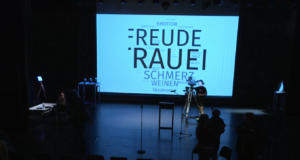
Christian Krug, “The Sentimental Disposition of (Popular) Trans- and Posthumanism”
20.05. 2022, 10:45h. Research Conference Posthuman Encounters: Desires, Fears, and the Uncanny (19-21 May 2022), Saarland University, Saarbrücken
Out Now: Lexicon of Global Melodrama
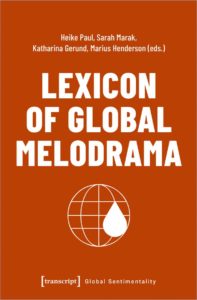 This new go-to reference book, edited by Heike Paul, Sarah Marak, Katharina Gerund and Marius Henderson, assembles contributions on global melodrama by experts from a wide range of disciplines, including cultural studies, film and media studies, gender and queer studies, political science, and postcolonial studies. The melodramas covered in this volume range from early 20th-century silent movies to contemporary films, from independent ‚arthouse‘ productions to Hollywood blockbusters. The comprehensive overview of global melodramatic film in the Lexicon constitutes a valuable resource for scholars and practitioners of film, teachers, film critics and anyone who is interested in the past and present of melodramatic film on a global scale. The Lexicon of Global Melodrama includes essays on All That Heaven Allows, Bombay, Casablanca, Die Büchse der Pandora, In the Mood for Love, Nosotros los Pobres, Terra Sonambula, and Tokyo Story.
Christian Krug, “A Night at the Theatre: Cultural Practices of Late 18th- and Early 19th-Century Melodrama”
21.04.2022, 10:15h. Guest lecture, Department of Languages and Literature, University of Basel (Switzerland)
Siblers DenkRäume – Heike Paul in conversation with the Bavarian Secretary of Arts and Sciences
In the latest episode of the secretary’s podcast „Siblers Denkräume“ (08.02.2022) Heike Paul talked about „Chancen und Grenzen öffentlicher Emotion: Zur Lage der politischen und sozialen Kultur in den USA“.
09.11.2021, 19.00h: Anger, Empathy, and Pathos: The Making of Collective Feelings.
Global Sentimentality Lecture Series II: „Affective Landscapes“
Our virtual lecture series continued in cooperation with Mirja Lecke (University of Regensburg) in the winter term 2021/22.
Read the full program here. To register for the series or single talks please write to project-sentimental@fau.de.
The lecture series sets out to examine “affective landscapes” (a concept used in literary and cultural studies, for instance by Berberich et al.) in their specific historical, cultural, and socio-political contexts. It aims to connect the paradigm of “affect studies” (Clough, Gregg & Seigworth) in the humanities and social sciences at large to the scholarship around the various dimensions and meanings of “landscape” and “region.” Case studies will be concerned with fictional landscapes of belonging, “haunted” places of past suffering, and material geographies of neglect and despair. How do feelings constitute and permeate landscapes – real and imagined? How do they move and linger between specific spatial constellations? And how can concepts such as “critical regionalism” (Herr, Powell) and “crossmapping” (Bronfen) help us understand and analyze specific cultural synergies and dissonances? In a comparative perspective, we seek to exemplarily define and discuss “affective landscapes” in and across regions in scenarios of belonging and alienation – and many nuances in between.
Jennifer Ladino (U of Idaho): Sites of Pride and Sites of Shame: Landscapes, Affective Dissonance, and Commemorating Asian Histories in the U.S. West
Lecture Series II, 21.10.2021
Roma Sendyka (U of Kraków): Landscapes of Fear: Remembering Manhunts in Post-Holocaust Communities
Lecture Series II, 4.11.2021
Donald Pease (Dartmouth College): Resentment and Ressentiment: at the Limits to Civic Sentimentalism in Suzan-Lori Parks’ The Book of Grace
Lecture Series II, 2.12.2021; cancelled
Dorota Kołodziejczyk (U of Wrocław): Olga Tokarczuk’s Cosmopolitan Silesian Landscape
Lecture Series II, 16.12.2021
Ana M. López (Tulane U): The Affective Landscape in Latin American Cinema: Nostalgia por la luz (2010)
Lecture Series II, 13.01.2022; cancelled
Ilia Kukulin (HSE University, Moscow): Postindustrial Melancholia: Contemporary Russia’s Suburban Landscapes in Dmitry Garichev’s Poetry
Lecture Series II, 27.01.2022
Heike Paul, „American Civil Sentimentalism, Past and Present„
26.10., 17.00h, at the Colloquium of the Center for the History of Emotions, Max-Planck-Institut für Bildungsforschung. Online.
29.09.-01.10.2021: Virtual Workshop „Sentimental Extraction“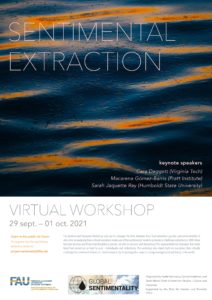
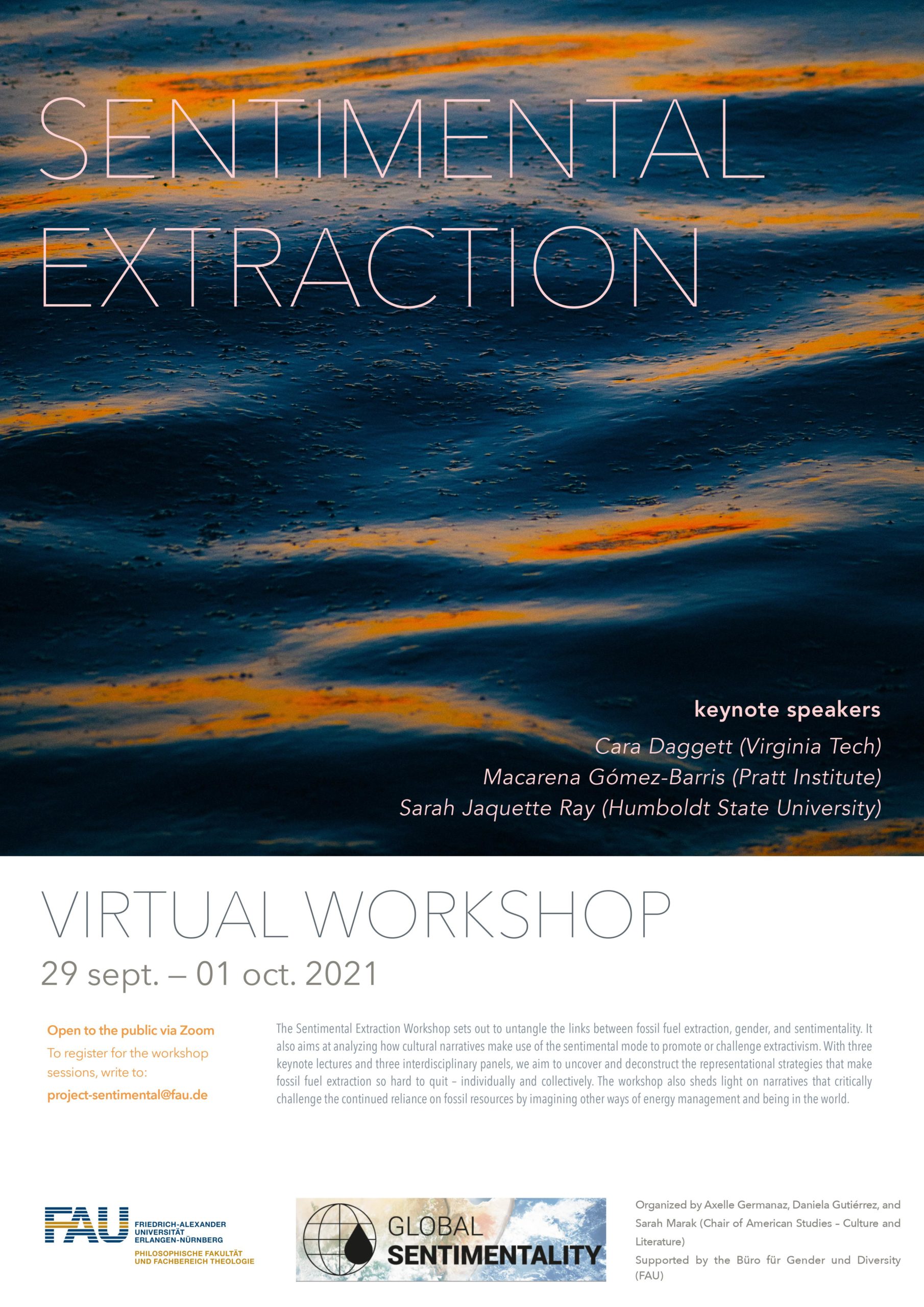
Even though it is well established that the extraction and burning of fossil fuels are a major motor of climate change, modern societies continue to rely on them. Debates about the perseverance of coal, oil, and gas are often centered on financial profitability and socio-economic benefits, reflecting the unwavering power of “fossil capital” (Andreas Malm). However, there is also a cultural dimension that reinforces societies’ “devotion, even love” (Stephanie LeMenager) to fossil resources. This three-day workshop sets out to untangle the links between fossil fuel extraction, gender, and sentimentality and aims at analyzing how cultural narratives make use of the sentimental mode to promote or challenge extractivism.
Keynote speakers: Cara Daggett (Virginia Tech), Macarena Gómez-Barris (Pratt Institute), and Sarah Jaquette Ray (Humboldt State University).
Read the full program here.
The workshop is generously funded by the Office of Equality and Diversity (FAU) and organized by Axelle Germanaz, Daniela Gutierrez, and Sarah Marak.
Heike Paul: „Civil Sentimentalism and its Discontent“
Inaugural Lecture in the MALS Distinguished Lectureship. Dartmouth College (Zoom), 14.07.2021, 22.00h (MEZ)
Marius Henderson: „An das ‚Ungedachte‘ rühren: Anti-Blackness, Afro-Pessimismus und zeitgenössische Kunst und Literatur“
The talk is part of the lecture series “Differenz_gestalten.” Folkwang University of the Arts, 18.00h, online, 06.07.2021
„Mächtige Gefühle“ – Heike Paul im Gespräch mit Ute Frevert (Max-Planck-Institut für Bildungsforschung)
12.05.2021, 18 Uhr. Die Veranstaltung findet über Zoom statt. Anmeldungen gerne an project-sentimental@fau.de.
„Mächtige Gefühle“: Ein Gespräch mit Ute Frevert über Angst, Liebe und Wut
Die Emotionshistorikerin Ute Frevert spricht mit Heike Paul über die Bedeutung von Gefühlen in Politik und Gesellschaft. Dabei werden konkrete Gefühlsäußerungen beleuchtet und analysiert – ihre Formen und Funktionen in unterschiedlichen historischen Situationen und in der Gegenwart. Wie werden Affekte und Emotionen zum Ausdruck gebracht und von wem? Welche Macht haben öffentliche Gefühle? Wie verbinden sich emotionale Codes mit gesellschaftspolitischen Anliegen und politischer Mobilisierung? Und wo liegen die Grenzen der Emotionalisierung (bzw. Sentimentalisierung) von Politik und politischer Programmatik? Am Beispiel ausgewählter Gefühlswörter – Angst, Liebe und Wut – werden diese und weitere Fragen erörtert.
New Publication:
Heike Paul. Amerikanischer Staatsbürgersentimentalismus. Zur Lage der politischen Kultur der USA (Wallstein Verlag, 2021)
„Das Sentimentale in der amerikanischen politischen Kultur mag konjunkturellen Schwankungen unterliegen, ist aber seit der Gründung der USA ein fest etabliertes Muster zur Erzeugung von öffentlichem Gefühl und 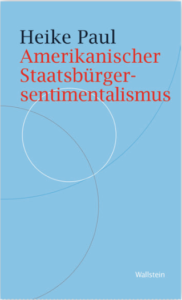 Gemeinschaft. Dabei war das verstärkte Auftreten des Sentimentalen in der US-amerikanischen Geschichte stets ein Symptom für politische Krisen und damit einhergehende Krisen der politischen Kommunikation. Dennoch hat sich der Staatsbürgersentimentalismus für amerikanische Staatslenker und Protestbewegungen gleichermaßen bewährt. Die Präsidentschaft Donald Trumps stellt eine eklatante Abkehr von den Konventionen des Staatsbürgersentimentalismus dar. Trump hat immer wieder bewiesen, dass ihm Zeichen der Empathie, des Mitleids, der Trauer fremd sind. Zahlreiche Beispiele zeigen jedoch, dass Amerikanerinnen und Amerikaner in ihrem zivilgesellschaftlichen Engagement den Staatsbürgersentimentalismus in öffentlichen Artikulationen von Trauer, Mitleid und Sorge weiterhin bemühen. Nicht erst seit dem letzten Wahlkampf ist allerdings überdeutlich, dass Mitgefühl und affektive Identifikation nicht mehr hinreichend sind, um die tiefgreifenden gesellschaftlichen Polarisierungen im Land zu überbrücken.“
Eine Rezension des Buches in der Sendung „Andruck – Das Magazin für Politische Literatur“ des Deutschlandfunks findet sich hier.
Lecture and Symposium: „Affective Worldmaking: Narrative Counterpublics of Gender and Sexuality„, 14.01.2021-15.01.2021
The Elisabeth-List Fellowship Research Group „Intimate Readings“ organized a lecture by affect scholar Ann Cvetkovich (Carleton University, Ottawa) and a symposium with (among others) Heike Paul, Claudia Breger, and Jana Aresin. The events were co-organized by FAU and Karl-Franzens-University Graz (KFU). Find the program here.
The „Global Sentimentality Lecture Series I“: 12.11.2020 – 04.02.2021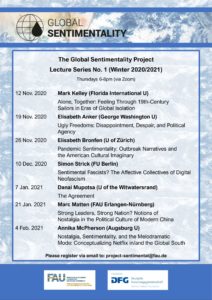
A virtual lecture series in the winter term 2020/21 with scholars from different disciplines and from around the globe. Read the full program here.
Annika McPherson (Augsburg University): Nostalgia, Sentimentality, and the Melodramatic Mode: Conceptualizing Netflix in/and the Global South
Global Sentimentality Lecture Series I, 04.02.2021
Marc Matten (FAU): „Strong Leaders, Strong Nation? Notions of Nostalgia in the Political Culture of Modern China“
Global Sentimentality Lecture Series I, 21.01.2021
Danai Mupotsa (University of the Witwatersrand): „The Agreement“
Global Sentimentality Lecture Series I, 07.01.2021
Simon Strick (FU Berlin): „Sentimental Fascists? The Affectice Collectives of Digital Neofascism“
Global Sentimentality Lecture Series I, 10.12.2020
Elisabeth Bronfen (University of Zürich): „Pandemic Sentimentality: Outbreak Narratives and the American Cultural Imaginary“
Global Sentimentality Lecture Series I, 26.11.2020
Elisabeth Anker (George Washington University): „Ugly Freedoms: Disappointment, Despair, and Political Agency“
Global Sentimentality Lecture Series I, 19.11.2020
Mark Kelley (Florida International University): „Alone, Together. Feeling Through 19th-Century Sailors in Eras of Global Isolation“
Global Sentimentality Lecture Series I, 12.11.2020
Marius Henderson: „Crisis and Continuity: Spectra of Suffering in Contemporary Experimental North American Poetry“
Guest lecture at the DFG-Centre for Advanced Studies “Russian-Language Poetry in Transition.” University of Trier, 05.02.2020.
Kay Kirchmann: „Weinen im Kino“
Talk at „Lange Nacht der Wissenschaften“, Erlangen, 19.10.2019
Heike Paul: „World Literature? American Sentimentalism in a Transcultural Perspective“
Talk delivered at the German-Japanese DFG-Symposium „Cultures in Translation: World History – World History – World Society. Germany, Japan, and the World in Transcultural Comparison,“ University of Tokyo, 9.10. – 11.10., 2019 in Tokyo, Japan. [PDF]
Christian Krug: „Sentimentale und gebrochene Helden Shakespeares: Altes und Neues von Romeo, Julia, Richard und Prinzessin Diana“
The talk is part of the lecture series „Strahlende Helden – Gebrochene Helden. Heldenbilder im Wandel der Zeit“.
16.15h, Bismarckstraße 1, Room C601, 24.07.2019.
Claudia Breger (Columbia University, NYC): „With A Sentimental Touch? High-Affect Aesthetics in Contemporary European Cinema“
The talk is part of the American Studies research colloquium.
10.15h, Bismarkstraße 1, Room C603, 03.07.2019.
Doris Feldmann and Christian Krug: „Sentimentales, Heroisches und Männliches in filmischen Repräsentationen der britischen Arbeiterklassen, 1960-2000“
18.00h, KH 1.019, Universitätsstr. 15, Erlangen, 08.07.2019.
Emmy-Noether-Vorlesung 2019
Heike Paul, „Tränen für Melania, Rosen für Nancy? Sentimentalismus und Politik in den USA.“
18.00 Uhr s.t., Senatssaal Kollegienhaus, Erlangen, 27.06.2019.
US TV Series Discussions: American Nostalgia
11.04.2019 – 06.06.2019 at the DAI (Nürnberg) and the vhs Club International (Erlangen)
Katharina Gerund, Peter Maurits, and Stephen Koetzing explore and discuss nostalgia in
contemporary American TV series such as Mad Men, Westworld, and The Americans.
Panel at the 2019 BAA Summer Academy: „Global Sentimentality“
29.05.2019, 10.00-12.00, at the DAI Nuremberg
Chair: Heike Paul
Katharina Gerund: „Home Front Sentimentality: Military Spouses in Contemporary TV Series“
Kathy-Ann Tan: „Disidentifying (with) the State: Decolonial Aesthetics and its Affective Entanglements“
„Tränen“ – Student exhibition organized by Kay Kirchmann
21. Internationales Figurentheaterfestival Erlangen, May 24 – June 2, 2019 and Lange Nacht der Wissenschaften, 19.10.2019.
Villa Vigoni Dialogue: „Civil Religion and Civil Sentimentalism: Cultural and Political Imaginaries of Order and Belonging“
13.3. – 16.3. 2019, Villa Vigoni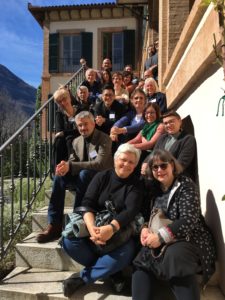
organized by Heike Paul with Donatella Izzo (Università di Napoli “L’Orientale”) and Margaretha Schweiger-Wilhelm (BAA)
Talk and Workshop: Rebecca Wanzo (Washington University, St.Louis): „Civil Rights Sentimentality“
13.12. 2018, 18.00 c.t., room A602, Bismarckstraße 1, 91054 Erlangen.
Kantorowicz Lecture by Heike Paul: „Staatsbürgersentimentalismus, American Style“
In October 2018 Heike Paul gave the „Kantorowicz Lecture in Political Language“ at the Goethe Universität Frankfurt.
Find the full lecture here.
Publication: „Sentimentalism“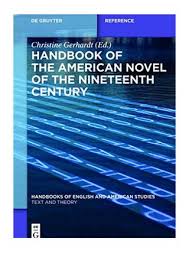
by Katharina Gerund and Heike Paul
published in: Handbook of the American Novel of the Nineteenth Century.
Ed. Christine Gerhardt. Berlin/München/Boston: Walter de Gruyter, 2018. 17-33.
International Conference: Public Feeling in Global Contexts
9.4. – 10.4. 2016, Alte Universitätsbibliothek, Erlangen
organized by Katharina Gerund and Heike Paul
Following a broader ‘turn to affect’ (Patricia Clough) in the humanities and the social sciences, this conference set out to investigate public feeling – as articulation, representation, and cultural and institutional practice – and the various functions it has in every-day life, in political communication, in allegedly private realms as well as in constructions of “intimate public spheres” (Lauren Berlant). The conference brought together scholars from different disciplines (sociology, literary studies, political science, art history, and media studies) to discuss the changing cultural specificities and the global impact of “affective economies” (Sara Ahmed) and “feeling rules” (Arlie Hochschild) in a framework of transnational and comparative cultural studies. In the course of our two-day conference, we addressed phenomena such as a post-9/11 political culture and its repertoire of affects; strategies/processes of (political) inclusion and exclusion via affective protocols; fear, anger, and (romantic) love as, purportedly, global “structures of feeling” (Raymond Williams); the (re)turn to/of aesthetics and affect in contemporary (popular) culture and art; and the role of affect for contemporary protest movements and political opposition. From the various cultural and disciplinary angles involved, we shed light on the ways in which public feeling-scholarship extends – and still needs to be extended further – beyond its current US-centered, Euro-American framework. Topics included how affects and emotions impact individual and collective identity formation in the age of globalization; how affect and feeling are entangled with cultural difference and constructions of otherness, and what kind of political work they perform in every-day situations and in ‘states of exception’.
Network
Prof. Dr. Heike Paul
- Phone number: +49 9131 85-22437
- Email: heike.paul@fau.de
Heike Paul is Professor of American Studies at FAU Erlangen-Nuernberg. She is recipient of the Gottfried Wilhelm Leibniz Prize (2018) and currently serves as the director of the Bavarian American Academy in Munich. Heike Paul is an authority on American myths (The Myths That Made America, 2014), popular culture and Americanization, and part of the interdisciplinary DFG-project “Reeducation Revisited”. Among her research interests are tacit knowledge, mobility studies, public feeling and sentimentality, and African American and Afro-Canadian studies. Her current research focuses on global sentimentality and she is co-editing a volume on “The Comeback of Populism”.
Jana Aresin, M.A.
- Phone number: +49913185-23421
- Email: jana.aresin@fau.de
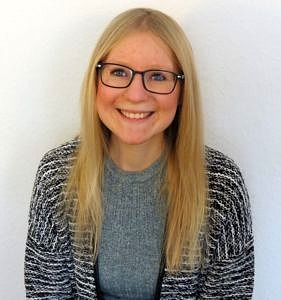 Jana Aresin is a PhD candidate and Research Associate at the chair of American Studies at FAU Erlangen-Nuremberg. She is a member of the interdisciplinary research project „Reeducation Revisited“ and currently working on her dissertation on gender and democracy in Cold War US and Japanese women’s magazines. Her research interests include democratization and reeducation narratives, Cold War feminism and the relation of mass media, nationalism, and gender.
Brigitte Bargetz
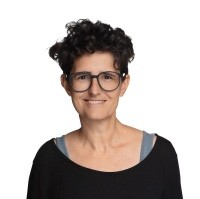 Brigitte Bargetz is Professor of Sociological Theory and Social Analyses at JKU Linz as well as Principal Investigator of the FWF-Research Project “New Charity Economy Through the Lens of Affective Statehood” at the Institute for Sociology and Social Research at WU Vienna (together with Markus Griesser). She has been working for many years on politics and affect, particularly at the intersection of critical theory, the current turn to affect and matter, as well as feminist, queer, and critical race theories on political feelings. See for instance: Bargetz, B. (2019). A Sentimental Contract: Ambivalences of Affective Politics and Publics. In A. Fleig, & C. von Scheve (Eds.), Public Spheres of Resonance: Constellations of Affect and Language (1 ed., pp. 63-80). Routledge. https://doi.org/10.4324/9780429466533-6 Currently, she engages with tendencies of authoritarianism and re-masculinization, volunteering in the context of welfare state transformations, and affective methodologies.
Claudia Breger
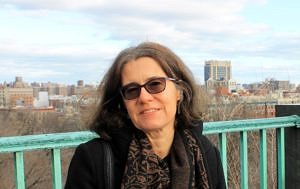 Claudia Breger is the Villard Professor of German and Comparative Literature at Columbia University. Having received her PhD and Habilitation from Humboldt University, Berlin, she previously taught at the University of Paderborn, Germany, and Indiana University, Bloomington. Her research and teaching span the seventeenth through the twenty-first centuries, with a focus on modern and contemporary culture, and emphases on film, performance, literature, and literary and cultural theory, as well as the intersections of gender, sexuality and race. More recent book publications include An Aesthetics of Narrative Performance: Transnational Theater, Literature and Film in Contemporary Germany. Columbus: Ohio State University Press, 2012 and the short volume Nach dem Sex? Sexualwissenschaft und Affect Studies. Hirschfeld-Lectures. Göttingen: Wallstein, 2014. Her new book, Making Worlds: Affect and Collectivity in Contemporary European Cinema, is forthcoming with Columbia University Press (2020).
Elisabeth Bronfen
 Elisabeth Bronfen is Professor of English and American Studies at the University of Zürich and Global Distinguished Professor at New York University. She is an authority on 19th and 20th century literature and visual culture and has published on a diverse array of topics. Hollywood, especially its role in war and military conflict, has been a recurring focus of Professor Bronfen’s work. Her current research projects include a book entitled Serial Shakespeare: The Survival and Return of the Bard in American Film and TV.
Prof. Dr. Thomas Demmelhuber
- Phone number: +49 9131 85-22315
- Email: thomas.demmelhuber@fau.de
Thomas Demmelhuber is Professor of Middle East Politics and Society at FAU and visiting professor at the College of Europe (Natolin). He has been researching the Middle East and its transregional entanglements for more than two decades. Demmelhuber publishes regularly in leading international journals (e.g. Democratization, Third World Quarterly) and has published/edited numerous books. His comparative work on the international dimension of authoritarianism and various forms of autocratization also includes forms and functions of sentimental repertoires in various political orders.
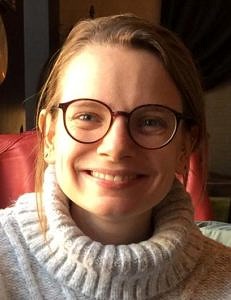
Axelle Germanaz is a PhD candidate and Research Associate at the chair of American Studies at FAU Erlangen-Nuernberg. She is currently working on a dissertation focused on white supremacist movements and American myths. Her research interests include theories of race and racism, popular culture, reeducation and Americanization, American myths, affect theory, and public feeling.
Prof. Dr. Eva Marlene Hausteiner
- Phone number: +49 9131 85-22336
- Email: eva.hausteiner@fau.de
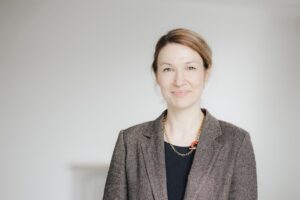
Eva Marlene Hausteiner is Professor of Political Theory and the History of Political Thought at FAU Erlangen-Nürnberg. Her work focuses on political strategies of legitimation in a variety of contexts: empire, federalism, and modern democratic polities. She has also published on Russian intellectual history, as well as on political narrartivees, conspiracy rumors, and political iconography. Her current work focuses on the role of time in politics
Dr. Dennis Henneböhl
- Phone number: +49 9131 85-29144
- Email: dennis.henneboehl@fau.de
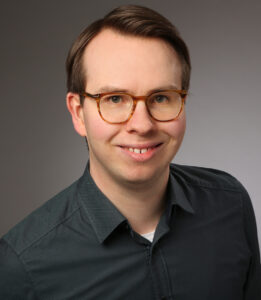
Dennis Henneböhl is a postdoctoral researcher and lecturer in English Literature and Culture at Friedrich-Alexander-Universität Erlangen-Nürnberg. He received his PhD from Paderborn University for his dissertation published by Brill | Fink under the title ‘Taking Back Control’ of the Nation and Its History? Contemporary Fiction’s Engagement with Nostalgia in Brexit Britain. In his postdoc project, he investigates the scientist as a social figure in Victorian literature and culture. Among his other key research areas are the BrexLit genre, historical fiction, political rhetoric, as well as contemporary (Northern) Irish literature and culture.
Dr. Isabel Kalous
- Phone number: +49 9131 85-22440
- Email: isabel.kalous@fau.de

Isabel Kalous is a lecturer and researcher and at the Chair of American Studies: Culture and Literature at FAU Erlangen-Nürnberg. She holds an MA in International Cultural and Business Studies from the University of Passau and a PhD in English and American Literature from JLU Giessen. Her research interests include eco-fiction, environmental sentimentality, cultural mobility studies, African American literature, and travel writing. She is the author of Black Travel Writing: Contemporary Narratives of Travel to Africa by African American and Black British Authors (transcript, 2021). Her current research project examines representations of non-motherhood and voluntary childlessness in American literature and culture across historical periods.
Prof. Dr. Kay Kirchmann
- Phone number: 0913185-2935029220
- Email: kay.kirchmann@fau.de
Kay Kirchmann is Professor of Media Studies at FAU Erlangen-Nuernberg. He has published on issues of temporality, historicity and film, and media theory. He is the co-editor of (Extra)Ordinary Presence: Social Configurations and Cultural Repertoires (2017) and the author of Licht-Zeiten – Licht-Räume. Das Licht als symbolische Form im Theater der Neuzeit (2000). His current project is situated in the field of production studies and explores the legacy of TV producer Wolfgang Rademann, creator of the successful German television series Das Traumschiff and Die Schwarzwald-Klinik.
Dr. Christian Krug
- Phone number: +49913185-22932
- Email: christian.krug@fau.de
Christian Krug is senior lecturer (associate professor) in English Studies at FAU Erlangen-Nuernberg. His research and teaching focusses on the historicity of popular culture and the ideological uses of popular icons (ed. The Cultures of James Bond, 2011). He has worked on popular theatre (a monograph on 19th-century British melodrama was published in 2001) and, at the University of Münster, on the “Interactivity of Digital Texts”. Currently, he is working on ideology and libidinal investments in British popular culture since the 19th century.
Mirja Lecke
 Mirja Lecke is chair of Slavic Literatures and Cultures at the University of Regensburg. Her academic interests include Russian literature of the imperial and post-soviet periods in postcolonial perspective, as well as the Polish literature of the enlightenment and post-communist eras. She published a monograph about the representation of the Western borderlands in Russian imperial literature: Westland. Polen und die Ukraine in der russischen Literatur von Puškin bis Babel (2015) and co-edited a volume on Russian-Georgian literary relations of the post-Soviet era with Elena Chkhaidze (Rossia – Gruzija after Empire; 2018). In 2020 she convened a workshop at the Israel Institue for Advances Studies (Jerusalem) with Efraim Sicher on „Cosmopolitanism in Urban Space: A Case Study of Odessa 1884-1925).
Haiyan Lee
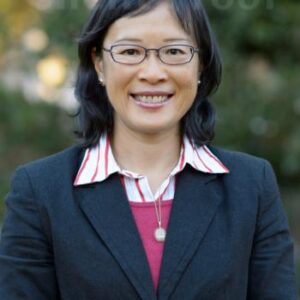 Haiyan Lee is Professor of Chinese Literature at Stanford University. Before joining Stanford in 2009, she taught at the University of Colorado at Boulder and the University of Hong Kong, and held postdoctoral fellowships at Cornell University and Harvard University. Her research focuses on modern Chinese literature and culture, with particular attention to emotion, morality, law, and the imagination.
Her first book, Revolution of the Heart: A Genealogy of Love in China, 1900–1950, traces the modern transformation of the concept of “love” (qing) in Chinese literary and cultural history and received the 2009 Joseph Levenson Prize from the Association for Asian Studies. Her second book, The Stranger and the Chinese Moral Imagination, explores figures of alterity in Chinese fiction, film, television, and exhibition culture. Her third book, A Certain Justice: Toward an Ecology of the Chinese Legal Imagination, examines Chinese conceptions of justice at the intersection of narrative, law, and ethics. She is currently working on a new project on animism, cognition, and the Chinese environmental imagination.
Kathleen Loock
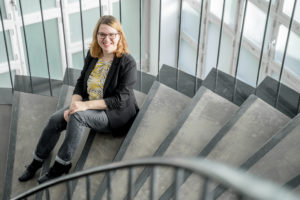 Kathleen Loock is Junior Professor of American Studies and Media Studies at Leibniz University Hannover and director of the research group „Hollywood Memories: Cinematic Remaking and the Construction of Global Movie Generations“ (funded by the DFG). Her research focuses on film remakes, sequels, and reboots, seriality in film and television, and the role memory and cultural repetition perform on the levels of identity formation and for the maintenance of imagined communities. She is the author of Kolumbus in den USA (2014), co-editor of Film Remakes, Adapations, and Fan Productions (with Constantine Verevis, 2012), and has edited several special issues: Serial Narratives (LWU: Literatur in Wissenschaft und Unterricht, 2014), Exploring Film Seriality (with Frank Krutnik, Film Studies, 2017), and American TV Series Revivals (Television & New Media, 2018). Her video essay on Blade Runner 2049 was published in [in]Transition: Journal of Videographic Film & Image Studies (2019), screened at international festivals and shortlisted for the Adelio Ferrero Award. She is currently finishing her book Hollywood Remaking.
Ana M. López
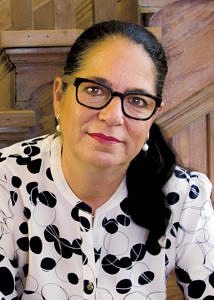 Ana M. López is a Professor in the Department of Communication, Associate Provost for Faculty Affairs and Director of the Cuban and Caribbean Studies Institute at Tulane University. Her research is focused on Latin American and Latino film and cultural studies. She is co-editor (with Marvin D’Lugo and Laura Podalsky) of The Routledge Companion to Latin American Cinema (2017) and the editor in chief of the journal Studies in Spanish and Latin American Cinemas. She is also the author of the essay collection Hollywood, Nuestra América y los Latinos (2012) and co-editor of three collections of essays on Latin American cinema. She has published more than three dozen essays and book chapters, addressing topics that range from melodrama and performance in the Golden Age Cinemas of Latin America, early silent cinema and modernity, and documentary to telenovelas, Cuban American media, and intermediality. She is currently working to establish a transnational research network focused on “On/Off Screen Cultures in Latin America” and on various projects reassessing melodrama in Latin America in the 21st century.
Sarah Marak
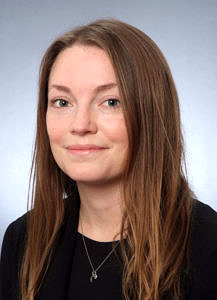
Sarah Marak is a PhD candidate and Research Associate at the chair of American Studies at FAU Erlangen-Nuernberg. She is currently working on a dissertation on eco-terrorism and environmental activism in US culture. Her research interests include critical terrorism studies, popular culture, history in fiction and film, nostalgia and sentimentality, and ecocriticism.
Professor Dr. Marc Matten
- Phone number: +49 9131 85-22445
- Email: marc.matten@fau.de
Marc Matten is Professor for Sinology at the department of Languages and Cultures of the Middle East and East Asia at FAU Erlangen-Nuernberg. His most recent book is titled Imagining a Postnational World – Hegemony and Space in Modern China (2016). His research interests include knowledge transfer during the Cold War, nationalism, and questions of national identity.
Annika McPherson
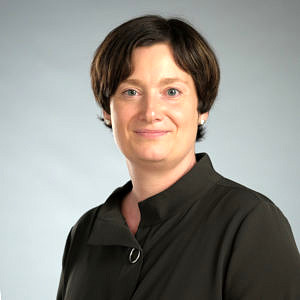
Annika McPherson is Professor for New English Literatures and Cultural Studies at the University of Augsburg, Germany. She studied at the Universities of Bremen and Victoria, B.C., Canada, previously taught British and Global Anglophone Literary and Cultural Studies at Carl von Ossietzky University Oldenburg and has been a guest lecturer at Stellenbosch University, South Africa. Her research and teaching areas include postcolonial studies; theories, policies and representations of cultural diversity in comparative perspective; Caribbean, West African, South African, Indian and Canadian literatures in English as well as diaspora studies and popular culture analysis. She served as President of the Association for Anglophone Postcolonial Studies (GAPS) and is an associate of the Wits Centre for Diversity Studies, University of the Witwatersrand, South Africa. She is currently developing a cooperative research project on „The Pleasures and Politics of Postcolonial Popular Cultures“ with a focus on global streaming media.

Peter J. Maurits is a postdoctoral fellow at the chair of American Studies at FAU Erlangen-Nuernberg. Focusing on mainly African literature, from the perspective of world-literature and postcolonial studies, he is interested in how cultural forms move, interact, and take shape, especially in the Africa-Europe-US-America triangle. His research project is titled “A Typology of African Science Fiction” and connects to his interest in science fiction, utopia, and genre.
Donald E. Pease
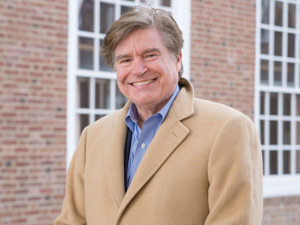 Donald E. Pease is Ted and Helen Geisel Third Century Professor in the Humanities and Professor of English and Comparative Literature at Dartmouth College. He is an authority on 19th and 20th century American literature and literary theory and is the founding director of the Futures of American Studies Institute at Dartmouth College. Among his most recent book publications are the biography Theodor Seuss Geisel (2010) and The New American Exceptionalism (2009). In 2012 he was awarded the American Studies Association’s Carl Bode-Norman Holmes Pearson Prize for life-long service to American Studies. Currently Donald E. Pease is working on a book project entitled American Studies after the New Americanists and research projects concerned with transnational American Studies and the Korean War.
Dr. Larissa Pfaller
- Phone number: +49 9131 85-26311
- Email: larissa.pfaller@fau.de

Larissa Pfaller is sociologist (Research Associate) at FAU Erlangen-Nuernberg. Her research interests focus on qualitative social research, methodology, and cultural sociology. She has co-authored an introduction to the method of metaphor analysis and published on topics like anti-aging medicine, successful aging, and organ donation. Larissa Pfaller’s current research project „Das Imaginäre an den Grenzen des Sozialen“ (DFG) focuses on the social imaginary of the forth age and post-mortem organ donation.
E. Deidre Pribram
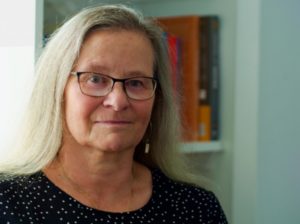 E. Deidre Pribram is Professor Emerita of the Communications Department, Molloy University, on Long Island, New York. Her research interests encompass cultural emotion studies, film and television studies, gender, and popular culture. She is the author of Emotional Expressionism: Television Serialization, The Melodramatic Mode, and Socioemotionality (2023). Other recent publications include „Ensemble Storytelling,“ in Exploring Seriality on Screen (2020), „Storied Feelings: Emotions, Culture, Media,“ in Emotions in Late Modernity (2019), A Cultural Approach to Emotional Disorders: Psychological and Aesthetic Interpretations (2018), and „Melodrama and the Aesthetics of Emotion,“ in Melodrama Unbound: Across History, Media, and National Cultures (2018).
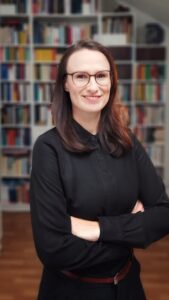 Sarah is a cultural sociologist specializing in questions of emotion sociology and theories of subjectification. In her dissertation, Gefühlstechniken. Eine Kultursoziologie emotionaler Selbstvermessung (2024), she examined mood-tracking apps as an instructive case for analyzing contemporary emotion culture and developed a research program for the cultural-sociological study of apps. Beyond mood tracking, her work engages with topics such as sustainability, self-optimization, sociological diagnoses of contemporary societies, the role of emotions in political culture, and the aestheticization of so-called “lost places.” She is currently a postdoctoral researcher in the interdisciplinary DFG Research Training Group 2726 The Sentimental in Literature, Culture, and Politics at Friedrich-Alexander-Universität Erlangen-Nürnberg. She is also co-editor of the volume Sentimental State(s). Affective Politics of Order and Belonging (transcript 2025).
For more on publications, talks, and teaching: https://www.soziologie.phil.fau.de/institut/team/pritz/
Ursula Prutsch
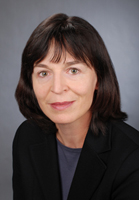 Ursula Prutsch is Associate Professor for North American Cultural History at the Ludwig-Maximilians-University, Munich. She teaches US-American as well as Latin American history. Her research is focused on populism in the United States and Latin America, on Inter-American policies, on Brazil and Argentina, as well as on Central European (forced) migration to Latin America. She is co-editor (with Heike Paul and Jürgen Gebhardt) of The Comeback of Populism. Transatlantic Perspectives (2019). She is the author of a book on Nelson Rockefeller’s Office of Inter-American Affairs in Brazil and Argentina (Creating Good Neighbors?, 2008), of the monograph Brasilien. Eine Kulturgeschichte (with Enrique Rodrigues Moura, 2013), the biography Eva Perón. Leben und Sterben einer Legende (2015), as well as of Populismus in den USA und Lateinamerika (2019). She has published dozens of articles on populism, transatlantic transfer of ideas and ideologies, and Inter-American relations from the 19th to the 21st century. She is currently working on a biography on Dona Leopoldina of Brazil and her instrumentalization for a politics of sentimentality.
Martin Puchner
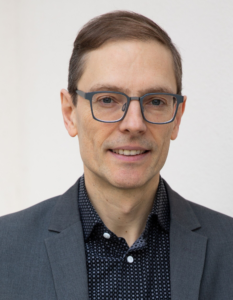 Martin Puchner is the Byron and Anita Wien Chair of Drama and of English and Comparative Literature at Harvard University. His prize-winning books cover subjects from philosophy to the arts, and his six-volume Norton Anthology of World Literature and his HarvardX MOOC (massive open online course) have brought four thousand years of literature to students across the globe. His best-selling book The Written World: The Power of Stories of Shape People, History, and Civilization (2017), which tells the story of literature from the invention of writing to the Internet, is being translated into eighteen languages. He is a member of the European Academy and has received numerous awards, including a Guggenheim Fellowship, a Cullman Fellowship, and the Berlin Prize. He is currently at work on a book about Rotwelsch, a secret language based on Yiddish, Hebrew, and German that has haunted his family for three generations.
Rama Srinivasan
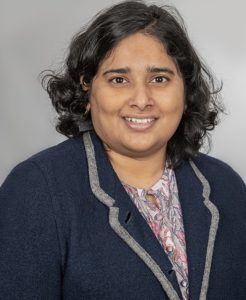 Rama Srinivasan is currently a Postdoctoral Fellow at the Department of Asian and North African Studies at Ca‘ Foscari University of Venice. She is also affiliated as visiting faculty with the International Institute of Information Technology, India. In 2020, she was awarded the Marie Curie Grant for the project, RE-NUP: Spousal Reunification and Integration Laws in Europe. RE-NUP studies the modes through which immigrant couples and families from South Asia navigate visa/residency processes in Germany, Italy and France. She completed her PhD in Anthropology at Brown University in 2017 and has also been a visiting postdoctoral fellow at the Max Planck Institute for Social Anthropology. In 2020, her monograph, Courting Desire: Litigating for Love in North India, was published by Rutgers University Press. Her research interests include gender and sexuality, law and society, popular culture, phenomenology, emotions and affect.
Silke Steets
Silke Steets is Professor of Sociology at FAU Erlangen-Nuernberg. Her research interests include Social Theory as well as the fields of space, popular culture, religion, contemporary art, materiality and the city. In her book Der sinnhafte Aufbau der gebauten Welt (Suhrkamp, 2015), she develops a knowledge-sociological theory of architecture, which extends Peter L. Berger and Thomas Luckmann’s The Social Construction of Reality to the built world. Her current empirical research project, funded by the German Research Foundation (DFG), focuses on “cognitive minorities” in Germany and the USA and compares Evangelicals in secular Leipzig and Unitarians in conservative Dallas, TX.
Simon Strick
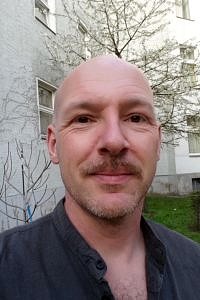 Simon Strick is currently a Postdoctoral Fellow at the John F. Kennedy Institute at the Freie Universität Berlin. His dissertation project brought together cultural studies, affect studies, and medicine and was published as American Dolorologies: Pain, Sentimentality, Biopolitics with SUNY Press in 2014. Among his research interests are medical history, media and film studies, disability theory, and popular culture.
Rebecca Wanzo
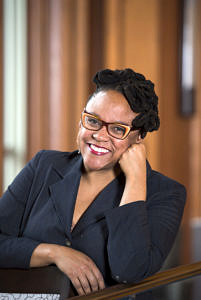 Rebecca Wanzo is Associate Professor for women, gender, and sexuality studies and Associate Director of the Center for Humanities at Washington University in St. Louis, Missouri. She is the author of The Suffering Will Not Be Televised: African American Women and Sentimental Political Storytelling (2009) and is currently working on a new project focused on African American citizenship and graphic storytelling. Moreover, Professor Wanzo’s work also focuses on civil rights sentimental fiction, theories of affect, and feminist and critical race theory.
Home

The Global Sentimentality Project is conducted by a network of scholars interested in the sentimental. The aesthetics and politics of the sentimental are examined in different research fields. The project facilitates exchange and collaboration across disciplines in workshops, lecture series, and public talks as well as in joint publications, among other formats. Moreover, our program offers short-term fellowships for junior and senior scholars worldwide at FAU Erlangen and publishes the book series „Global Sentimentality“ with transcript.. More…

The research training group „The Sentimental in Literature, Culture, and Politics“ examines forms and functions of the sentimental in synchronic and diachronic perspectives. We conceive of the sentimental as a communicative and relational code which can draw on emotional knowledge and activate empathy. This code can be observed and studied in different fields of symbolic interaction, i.e. aesthetic-literary, politico-rhetorical, medially staged and as part of socially effective discourses and practices. With a comparative perspective, the research training group focuses both on culturally specific uses and on inter- and transcultural processes of appropriation of this code in national and transnational contexts. The sentimental unfolds its power as aesthetic mode of representation and as sociopolitical strategy of interpellation in literary and non-literary texts, as a means of cultural crisis- and contingency-management, and as a strategy of political mobilization, for example in protest movements and populist rhetoric… More…